When the UK finally gets a stretch of warm weather, most people are thinking about garden BBQs, holidays and enjoying the sunshine. In a sublimation workshop, however, summer often brings a very different kind of surprise.
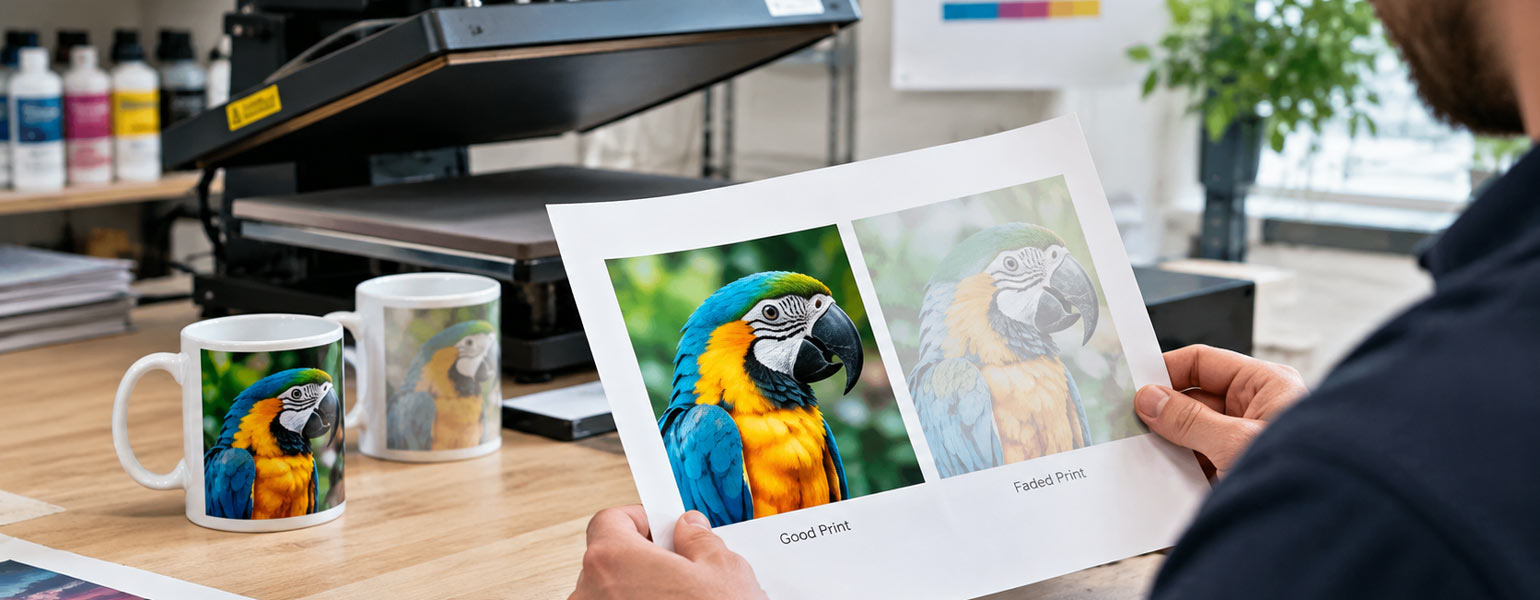
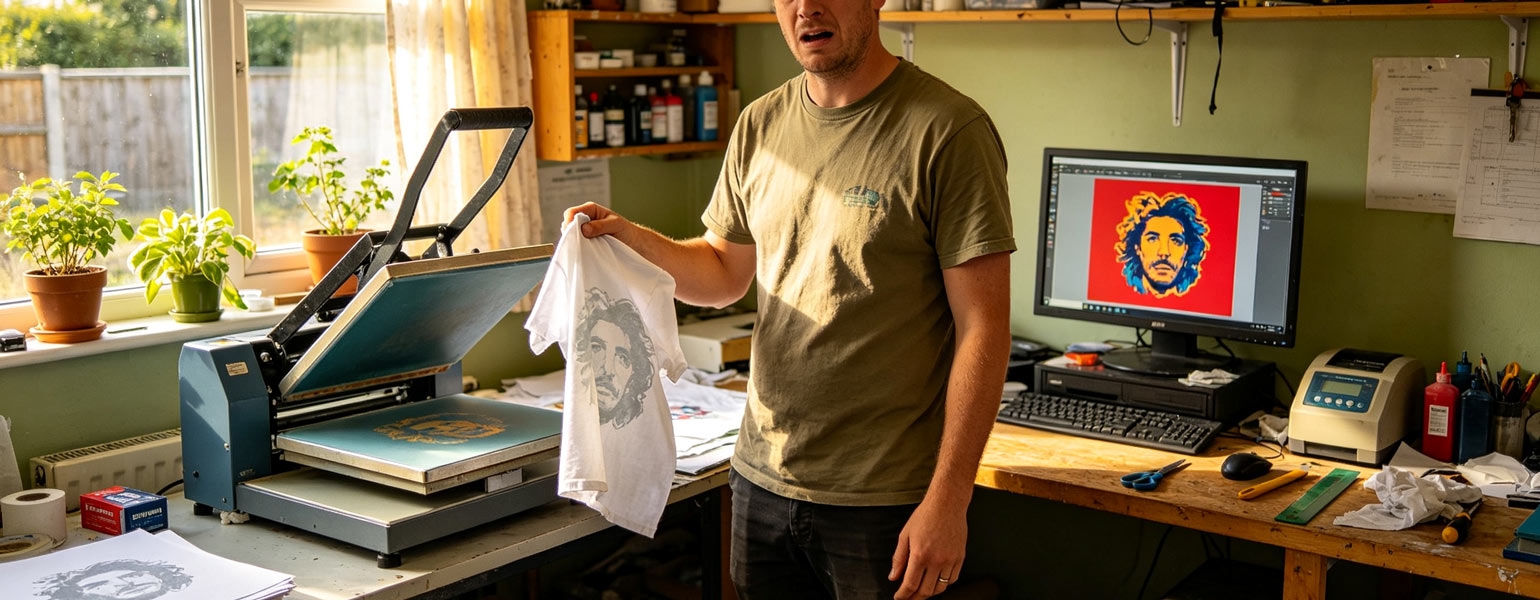
You’ve been printing the same design for weeks. The printer settings haven’t changed. You’re using the same paper, the same ink, the same heat press and the same blank products. Yet somehow the finished print looks… wrong.
The reds aren’t as vibrant.
The blacks seem slightly grey.
Blue tones have lost some depth.
Overall, everything feels a little flatter than it did a month ago.
For people who are new to sublimation printing, this can be incredibly frustrating. Many immediately assume there’s something wrong with the printer, the ICC profile or even the ink itself. Some spend hours recalibrating colours before realising nothing has actually failed.
The reality is much less dramatic.
Summer changes the environment around your equipment, and sublimation is surprisingly sensitive to those changes.
Experienced print shops expect it every year. In fact, if you speak to people who’ve worked with sublimation for long enough, you’ll often hear them say something like:
“Summer printing always needs a bit more attention.”
That isn’t just workshop folklore. Temperature, humidity, moisture absorption and even where you store your transfer paper can all influence the final result.
If you’ve recently noticed your colours looking slightly faded, don’t panic. In most cases, it’s completely fixable once you understand what’s happening behind the scenes. For anyone feeling uncertain about what to do next, there’s a quick troubleshooting checklist included later in this guide to help you diagnose and resolve the issue step by step.
Why Summer Affects Sublimation More Than You Think
One of the biggest misconceptions among beginners is the belief that sublimation depends only on the printer and the heat press.
In reality, sublimation is a complete process, and each stage responds differently to the surrounding environment.
During a typical British summer, especially when temperatures climb above 25°C, several things happen at once:
- The workshop becomes warmer.
- Relative humidity often increases.
- Transfer paper absorbs moisture faster.
- Heat presses may retain more residual heat between jobs.
- Blank products can start each press cycle at a higher temperature.
None of these changes seems particularly significant on its own.
Combined, however, they can noticeably affect colour consistency.
That’s why many experienced operators don’t keep the same settings all year round. Small seasonal adjustments are perfectly normal.
The Biggest Culprit Is Usually Moisture
If there’s one thing that catches newcomers out every summer, it’s moisture.
Transfer paper is far more sensitive than many people realise.
Even if it feels perfectly dry when you pick it up, paper naturally absorbs moisture from the surrounding air. During humid weather, the moisture content can increase surprisingly quickly. So how can you tell if your transfer paper is too damp to use? One simple way is to gently touch or feel a sheet: if it feels limp, slightly heavier than usual, or cool to the touch, it may have absorbed excess moisture. You can also take a single sheet and press it quickly using plain copy paper on both sides—if you notice steam or small damp patches on the protective paper after pressing, that’s a strong sign your transfer paper is carrying extra moisture.
Once the paper enters the heat press, the trapped moisture rapidly turns into steam.
Instead of allowing dye to transfer smoothly into the polyester coating, the escaping steam can slightly disturb the sublimation process.
The results often include:
- Softer colours
- Slightly grey-looking blacks
- Less saturated reds
- Reduced image sharpness
- Occasional uneven colour patches
Many beginners immediately blame their ink.
In reality, perfectly good ink often gets unfairly blamed for what is actually a storage issue.
Why Humidity Matters More Than Temperature
People often focus on how hot the room feels, but humidity is frequently the bigger problem.
A warm, dry workshop generally causes fewer issues than a humid one.
Think about those muggy summer days in Britain when the air feels heavy after overnight rain. Even though the temperature might only be around 22°C, the relative humidity can be high enough for paper to absorb moisture throughout the day.
If your transfer paper is left open on a workbench, it effectively acts like a sponge.
The longer it sits exposed, the more moisture it collects.
That’s one reason why many commercial sublimation businesses only remove as much paper as they expect to use during a production run, leaving the rest sealed in its original packaging.
It’s a simple habit that can prevent a surprising number of colour issues.
When Heat Press Settings Suddenly Stop Working
Another common source of confusion is discovering that settings which worked perfectly in spring no longer produce the same results in July.
This doesn’t necessarily mean your heat press has gone out of calibration.
The surrounding conditions have simply changed.
Imagine pressing a polyester T-shirt that’s already been sitting in a 28°C workshop all afternoon.
Now compare that with pressing the same shirt during February, when the room is only 16°C.
The starting point is completely different.
Likewise, if you’re running continuous production, the heat press itself may not cool down as much between jobs. The platen retains heat, meaning each subsequent press can behave slightly differently from the first.
These small differences are enough to affect colour development.
Experienced operators often keep a notebook of seasonal adjustments rather than relying on one permanent set of numbers.
Don’t Rush to Increase the Temperature
One mistake beginners often make is turning the heat press up by 15 or 20 degrees the moment colours look dull.
Unfortunately, this usually creates a different set of problems.
Too much heat can cause:
- Blurred edges
- Colour bleeding
- Over-sublimation
- Browning on some substrates
- Loss of fine detail
Instead, make small adjustments.
A slight increase in pressing time may be enough.
In other cases, reducing moisture before pressing delivers better results than increasing the temperature at all.
Remember, dull colours aren’t always caused by insufficient heat.
Sometimes they’re caused by excess moisture interfering with dye transfer.
Pre-Pressing Makes a Bigger Difference in Summer
If there’s one habit worth developing during warmer months, it’s pre-pressing your blanks.
Many experienced sublimation users give garments a quick press for several seconds before applying the transfer.
This helps remove surface moisture trapped in the fabric and creates a more stable surface for the transfer paper.
The same principle applies to certain coated hard substrates.
A short pre-press won’t solve every problem, but it often improves colour consistency when humidity is high.
Think of it as giving the material a chance to settle before the actual transfer begins.
It’s a small step that many beginners skip, yet it can make a noticeable difference once summer arrives.
Small Adjustments Often Beat Big Changes
One of the most valuable lessons in sublimation is that consistency matters more than constantly chasing the “perfect” setting.
When colours begin to look different during summer, avoid changing several variables at once.
Instead, work methodically.
Print a small colour test using the same design you’ve successfully produced before. If possible, use the same batch of transfer paper and the same type of blank. Then make one small adjustment at a time.
For example:
- Increase pressing time by three to five seconds.
- Leave the temperature unchanged.
- Compare the results.
- Only make another adjustment if necessary.
This approach makes it much easier to identify what’s actually affecting the print.
Many beginners end up making the problem worse simply because they change the temperature, pressure and pressing time altogether. When the result still isn’t right, they have no idea which adjustment caused it.
A slow, controlled approach almost always saves both materials and frustration.
Summer Storage Habits That Can Save a Lot of Headaches
Storage doesn’t get talked about nearly enough in sublimation.
People spend hundreds or even thousands of pounds on printers and heat presses, yet leave expensive transfer paper sitting on an open shelf all summer.
That rarely ends well.
Keep Transfer Paper Sealed
Whenever possible, keep unused paper inside its original packaging.
If you’ve opened a pack, reseal it after use.
Many experienced print shops also store paper inside airtight plastic storage boxes, particularly during humid months.
It may seem a little excessive at first, but once you’ve thrown away a stack of damp transfer paper, the habit suddenly makes perfect sense.
Avoid Direct Sunlight
It sounds obvious, but it’s surprisingly common to see paper or blanks left beside a sunny workshop window.
Direct sunlight increases temperature far more quickly than people expect.
It can also cause uneven heating across stored materials, making consistency harder to achieve later.
A cool, shaded storage area is always the better choice.
Store Ink Properly
Sublimation ink is generally stable, but that doesn’t mean it enjoys sitting in excessive heat.
Avoid storing spare bottles in conservatories, loft spaces or metal sheds where temperatures can rise dramatically during sunny weather.
A clean indoor environment with a relatively stable temperature will help maintain ink quality over time.
Don’t Forget About Your Blanks
It’s easy to focus on the printer and paper while forgetting that the blank product itself is also reacting to the environment.
Take polyester garments, for example.
If they’re stored in a warm room with high humidity, they’ll naturally absorb some moisture from the air.
The same applies to mouse mats, cushions and other fabric-based sublimation products.
Giving garments a quick lint roll and a short pre-press before transferring the design helps remove loose fibres and surface moisture.
Hard substrates deserve attention too.
Dust, fingerprints and condensation can all affect the final finish, particularly if products have been moved between different storage temperatures.
Good preparation is one of those small routines that often separates consistently good results from unpredictable ones.
Summer Can Affect More Than Just Colour
While faded colours tend to attract the most attention, they’re far from the only seasonal issue.
Ghosting Can Become More Noticeable
Higher temperatures sometimes make transfer paper slightly more flexible.
If the paper shifts even a tiny amount during pressing, you may notice a faint shadow around text or graphics.
Using quality heat-resistant tape and handling the transfer carefully before lifting it can reduce the risk.
Protective Paper Can Absorb Moisture Too
Many people remember to protect their transfer paper but overlook the butcher paper or protective sheets used inside the heat press.
These sheets can also absorb moisture over time.
Replacing them regularly helps maintain cleaner transfers and reduces unwanted steam during pressing.
Dust Builds Up Faster
Summer often means doors and windows are left open for ventilation.
Unfortunately, that also allows more dust and airborne particles into the workshop.
Dust may seem harmless, but even tiny particles trapped beneath transfer paper can leave visible marks on finished products.
A quick wipe-down of the work area each day goes a long way.
Should You Print Less During Hot Weather?
Not at all.
Some newcomers assume summer is simply a bad time for sublimation.
That’s not true.
Professional print businesses continue producing thousands of items throughout the summer every year.
The difference is that experienced operators adapt their workflow rather than expecting summer to behave like winter.
Think of it in the same way photographers adjust camera settings depending on the light.
The equipment hasn’t changed.
The environment has.
Printing works much the same way.
Once you understand how temperature and humidity influence the process, seasonal adjustments become part of the routine instead of a source of stress.
A Quick Summer Troubleshooting Checklist
If your sublimation colours suddenly look dull, work through these questions before assuming something is wrong with your printer.
Is the transfer paper still dry?
Paper that has absorbed moisture is one of the most common causes of washed-out colours.
Has the humidity increased recently?
Several humid days in a row can affect printing, even if everything else stays the same.
Have your blanks been pre-pressed?
Removing surface moisture can noticeably improve transfer quality.
Are you using the same press settings as winter?
Small seasonal adjustments may produce better consistency.
Have storage conditions changed?
Paper, ink and blank products all benefit from a cool, dry storage area.
Have you changed anything else?
New paper, different blanks or a replacement ink batch should all be considered before blaming the weather alone.
Working through these simple checks often solves the problem much faster than recalibrating your entire colour management system.
Experience Is Still the Best Tool in the Workshop
One thing that becomes clear after a few summers in sublimation is that every workshop develops its own rhythm.
A small home studio in Scotland will behave differently from a busy commercial print room in Birmingham. Likewise, a garage workshop may experience greater temperature swings than a climate-controlled production space.
That’s why experienced printers rarely rely on someone else’s exact settings.
Instead, they build their own seasonal reference points.
Keeping a simple notebook or digital log of successful print settings throughout the year can be incredibly useful. Recording the room temperature, humidity, pressing time, and any small adjustments makes it much easier to recognise patterns when summer returns.
After a while, those seasonal tweaks become second nature rather than something to worry about.
Reliable Materials Make Seasonal Adjustments Easier
While no transfer paper or ink can eliminate the effects of heat and humidity, using consistent, well-made materials removes one variable from the equation.
When you’re trying to diagnose a colour issue, it’s far easier if you already trust the quality of your consumables.
At Signzworld, you’ll find a wide range of sublimation supplies designed for everyday production, including sublimation paper, sublimation inks, heat presses and blank products suitable for businesses of all sizes.
Good materials won’t stop summer from arriving, but they do make it easier to achieve repeatable, dependable results as the seasons change.
And perhaps that’s the biggest lesson of all.
Summer doesn’t have to be the season when your colours suddenly become unpredictable. With a few sensible adjustments, better storage habits and a little extra attention to your workflow, you can keep producing vibrant, consistent sublimation prints right through the warmest months of the year.