If you ask most heat press business owners where their highest costs come from, the answers are usually the same. Blanks. Ink. Transfer paper. Electricity. Shipping.
Those are the obvious ones.
The surprising part is that many of the biggest losses never appear as a single line on an invoice. They creep into the business through small daily habits that nobody really notices until they start adding everything up.
One sheet of transfer paper was wasted because the design shifted.
A mug pressed twice because the temperature wasn’t quite right.
A stack of polyester T-shirts left uncovered in a damp workshop.
An employee spends 20 minutes looking for the right blank because the stockroom isn’t organised.
None of these feels expensive on its own. Across hundreds or thousands of orders, however, they quietly eat into profit.
After speaking with print shops and watching countless production lines over the years, one thing becomes clear. Businesses that consistently make good margins aren’t always the ones with the newest equipment. More often than not, they’re the ones who have built efficient routines and eliminated unnecessary waste.
With sustainability becoming a bigger talking point across the UK and Europe, reducing waste is now being viewed from two angles. Yes, it’s better for the environment, but it’s also one of the simplest ways to protect your bottom line.
Let’s look at where money is really disappearing during heat press production and, more importantly, how to stop it. We’ll cover the key areas that make the biggest difference for most shops: workspace organisation, machine calibration, material handling, operator training, inventory management and simple ways to save on electricity. By paying attention to these points, you can quickly find solutions that protect your profits.
Waste Starts Long Before the Heat Press Turns On
When people think about waste, they often picture ruined prints or damaged garments.
In reality, waste usually starts much earlier.
A poorly organised workspace creates unnecessary movement. Operators walk back and forth looking for tape, scissors, protective paper or finished products. Those extra seconds quickly become hours over the course of a week.
An untidy workflow also increases mistakes. It’s much easier to pick up the wrong transfer, press the wrong garment size or forget a production step when everything feels rushed.
One of the simplest improvements is to arrange the workspace according to the order of production.
For example:
- Receiving blanks
- Printing transfers
- Cutting artwork
- Heat pressing
- Cooling
- Quality inspection
- Packing
When each stage naturally flows into the next, production feels calmer, faster and more consistent.
Saving just thirty seconds per order might not sound impressive, but across hundreds of jobs every month, the labour savings become surprisingly significant. For instance, if your shop processes 300 orders in a month, that’s 150 minutes saved—which is two and a half hours of labour you get back simply by improving workflow. Over a year, that adds up to several full workdays that could be used for more value-adding tasks instead.
Small Temperature Errors Can Create Big Financial Losses
Most heat press owners trust the display on the machine.
Unfortunately, displays aren’t always perfectly accurate.
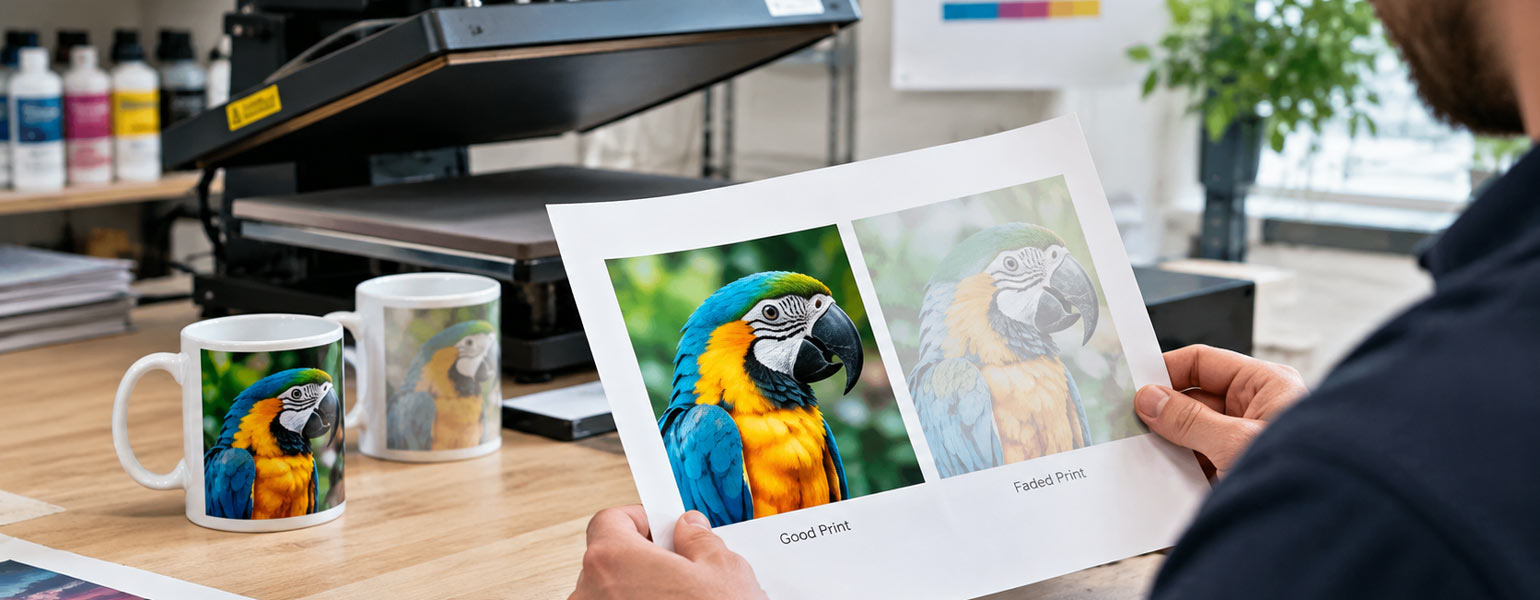
A difference of only five degrees can completely change the quality of a sublimation print.
If the temperature is too low:
- Colours appear dull.
- Ink doesn’t fully transfer.
- Customers may complain after washing.
If the temperature is too high:
- Polyester may scorch.
- Colours can shift.
- Protective paper may leave unwanted marks.
The expensive part isn’t the ruined blank.
It’s everything that comes afterwards.
By the time the issue has been spotted, the costs have already started adding up.
A fresh transfer needs printing, the product has to be pressed again, and everything must go through another round of inspection and packing.
If the mistake isn’t caught before dispatch, there’s also customer service to deal with, replacement shipping to arrange and valuable time that could have been spent on new orders.
That single incorrect temperature can easily cost several times more than the blank itself.
Checking heat press calibration every few months using a reliable infrared thermometer or temperature test strips is inexpensive compared with the cost of repeated production errors.
Pressure Is Often Overlooked
Temperature receives most of the attention, yet pressure causes just as many failed transfers.
Too much pressure can flatten fabrics, leave press marks or distort certain blanks.
Too little pressure leads to incomplete transfers and uneven colours.
Rather than relying on guesswork, it’s worth creating simple pressure guides for different products.
For example:
Lightweight polyester sportswear
Medium pressure with shorter pressing times.
Ceramic mugs
Firm, even pressure without overtightening.
MDF products
Consistent pressure across the entire surface.
Documenting successful settings saves valuable time when repeating future jobs and helps maintain consistency across different operators.
Moisture Is More Expensive Than Most People Realise
Humidity is one of the least visible causes of waste.
Anyone working in the UK knows that moisture can appear almost overnight, especially during wetter months.
Transfer paper absorbs moisture surprisingly quickly.
So do polyester fabrics.
The result can be:
- Ghosting
- Blurred edges
- Washed-out colours
- Uneven transfers
- Steam marks
Many people assume they need new ink or better paper when the real issue is simply damp materials.
Simple storage habits make a noticeable difference.
Keep transfer paper sealed until needed.
Store blanks away from direct concrete floors.
Maintain stable room conditions whenever possible.
Pre-press garments for a few seconds before applying transfers to remove surface moisture.
Those few extra seconds often prevent an entire garment from ending up in the reject pile.
Printing More Test Sheets Than Necessary
Testing is essential.
Endless testing isn’t.
Many businesses repeat the same colour tests every time they run a familiar product.
Instead, build a reference library.
Keep successful samples.
Record:
- Temperature
- Time
- Pressure
- Paper brand
- Ink profile
- Blank supplier
Next time the same product returns, there’s no need to start from scratch.
Experienced print shops often have shelves filled with labelled sample products. They aren’t decorations.
They’re production tools.
Poor Artwork Preparation Wastes More Than Paper
A surprising amount of material is lost before anything reaches the printer.
Examples include:
Artwork printed at the wrong size.
Mirror settings forgotten.
Incorrect colour profiles.
Duplicate prints.
Low-resolution customer files printed anyway.
Every unnecessary print consumes:
- Ink
- Transfer paper
- Electricity
- Machine wear
- Labour
Spending two extra minutes checking artwork usually saves far more time later.
Many businesses now use simple pre-production checklists to reduce these avoidable mistakes.
Leftover Space Is Still Valuable
Large transfer sheets often contain empty areas that simply go unused.
Those spaces can hold:
Small logos.
Neck labels.
Care labels.
Test colour patches.
Future sample designs.
Over the course of a year, making better use of unused paper space can significantly reduce paper consumption.
Good nesting software can help, but even careful manual layout makes a noticeable difference.
Electricity Costs Add Up Faster Than You Think
Energy prices remain a concern for many UK businesses.
Heat presses consume considerable power, particularly during busy production periods.
Some common habits increase electricity costs without improving output.
Leaving presses switched on during long lunch breaks.
Heating multiple machines when only one is required.
Running presses long before production begins.
Repeatedly opening and closing machines unnecessarily.
Scheduling production into larger batches often reduces warm-up cycles and improves overall efficiency.
Regular maintenance also helps.
Clean platens transfer heat more effectively, allowing machines to operate as intended rather than compensating for dirt or residue.
Rework Is One of the Most Expensive Hidden Costs
Most people calculate the cost of a ruined T-shirt.
Far fewer calculate the cost of rework.
Imagine one personalised hoodie needs pressing again.
The replacement cost includes:
A new blank.
Another transfer print.
Additional electricity.
Another packing process.
Quality inspection.
Customer communication.
Extra delivery if the parcel has already shipped.
The labour involved often exceeds the material cost.
Reducing rework by only a few percentage points can make a meaningful difference to monthly profits.
This is why many experienced production managers focus less on speed and more on getting every order right the first time.
Inventory Problems Quietly Drain Cash
Buying too much stock feels safe.
Until products sit untouched for months.
Some blanks become outdated.
Packaging gets damaged.
Storage space fills up.
Cash becomes tied up in products that aren’t generating income.
Regular stock reviews help identify slow-moving items before they become dead inventory.
Organising blanks using a first-in, first-out system also reduces unnecessary ageing.
Cheap Consumables Aren’t Always the Cheapest Option
Everyone likes saving money.
However, the cheapest transfer paper isn’t always the best value.
Poor-quality consumables can lead to:
Higher ink usage.
Inconsistent colour release.
Paper curling.
Increased ghosting.
Higher reject rates.
The true cost isn’t measured by the price per sheet.
It’s measured by the successfully finished products.
Reliable consumables often reduce waste enough to offset their slightly higher purchase price.
Sustainable Choices Can Also Reduce Costs
Sustainability sometimes gets dismissed as something only large companies worry about.
In reality, many environmentally friendly practices also make financial sense.
Recyclable Packaging
Using recyclable cartons and paper-based fillers often simplifies waste disposal while meeting growing customer expectations.
Good packaging also reduces product damage during transport, lowering replacement costs.
Sustainable Blanks
Better-quality, responsibly sourced blanks usually offer greater consistency between production batches.
Consistency means fewer surprises during pressing and fewer rejected products.
Water-Based Inks
Where appropriate for the printing process, water-based ink systems can improve workplace cleanliness and reduce reliance on stronger cleaning chemicals.
Cleaner equipment often requires less maintenance over time.
Printing Only What You Need
Producing smaller batches based on actual demand avoids shelves full of unsold inventory.
This approach reduces storage costs and unnecessary material consumption.
Interestingly, many businesses begin their sustainability journey simply because they want to save money.
The environmental benefits often come naturally afterwards.
Train People, Not Just Machines
New equipment usually receives detailed setup instructions.
New staff sometimes receive far less.
A ten-minute demonstration isn’t enough.
Simple training documents covering common mistakes can prevent countless production errors.
Topics might include:
Correct pressure settings.
Paper handling.
Storage procedures.
Quality inspection.
Cleaning routines.
Packing standards.
Consistency between operators is often the difference between average production and excellent production.
Don’t Ignore the Cost of Downtime
A heat press that suddenly stops working doesn’t only require repairs.
Production pauses.
Orders are delayed.
Staff wait.
Customers chase updates.
Emergency shipping may become necessary.
Routine maintenance rarely feels urgent until something breaks.
Cleaning platens, checking pressure mechanisms, inspecting cables and replacing worn silicone pads before they fail is usually much cheaper than dealing with unexpected downtime.
Small Improvements Create Big Results
One of the most interesting conversations I had recently was with the owner of a medium-sized custom printing business.
He didn’t buy new printers.
He didn’t replace every heat press.
Instead, he spent three months improving small daily habits.
Artwork approval became stricter.
Transfer paper was stored correctly.
Operators followed standard pressing guides.
Machines were calibrated.
Workstations were reorganised.
Nothing dramatic happened overnight.
Yet after several months, rejected products had fallen noticeably, production moved more smoothly, and electricity consumption was lower simply because machines weren’t running unnecessarily.
His comment stayed with me.
“We stopped chasing faster production and started chasing fewer mistakes.”
That simple shift in thinking made a measurable difference.
Better Habits Beat Bigger Budgets
Every heat press business will experience some level of waste. That is part of manufacturing.
The goal isn’t perfection.
The goal is to make waste the exception rather than the routine.
Most unnecessary costs don’t come from one catastrophic mistake. They come from hundreds of small decisions repeated every single day.
Store materials properly.
Maintain consistent machine settings.
Train staff well.
Organise production logically.
Review energy usage.
Invest in consumables that deliver reliable results instead of simply choosing the lowest price.
Individually, these improvements may appear modest. Together, they can significantly reduce operating costs while creating a more efficient and sustainable production environment.
For businesses looking to improve both productivity and print consistency, choosing dependable equipment and quality consumables is just as important as refining daily processes. Signzworld offers a wide range of heat press machines, sublimation blanks, transfer papers and related supplies designed to support reliable production from small workshops through to growing commercial operations. Combined with efficient working practices, the right tools can help reduce waste, improve consistency and protect profit over the long term.