If you’ve been around sublimation printing for any length of time, you’ve probably heard the same advice over and over again.
“Just use 100% polyester.”
Technically, that’s true.
But it’s also one of the biggest oversimplifications in the industry.
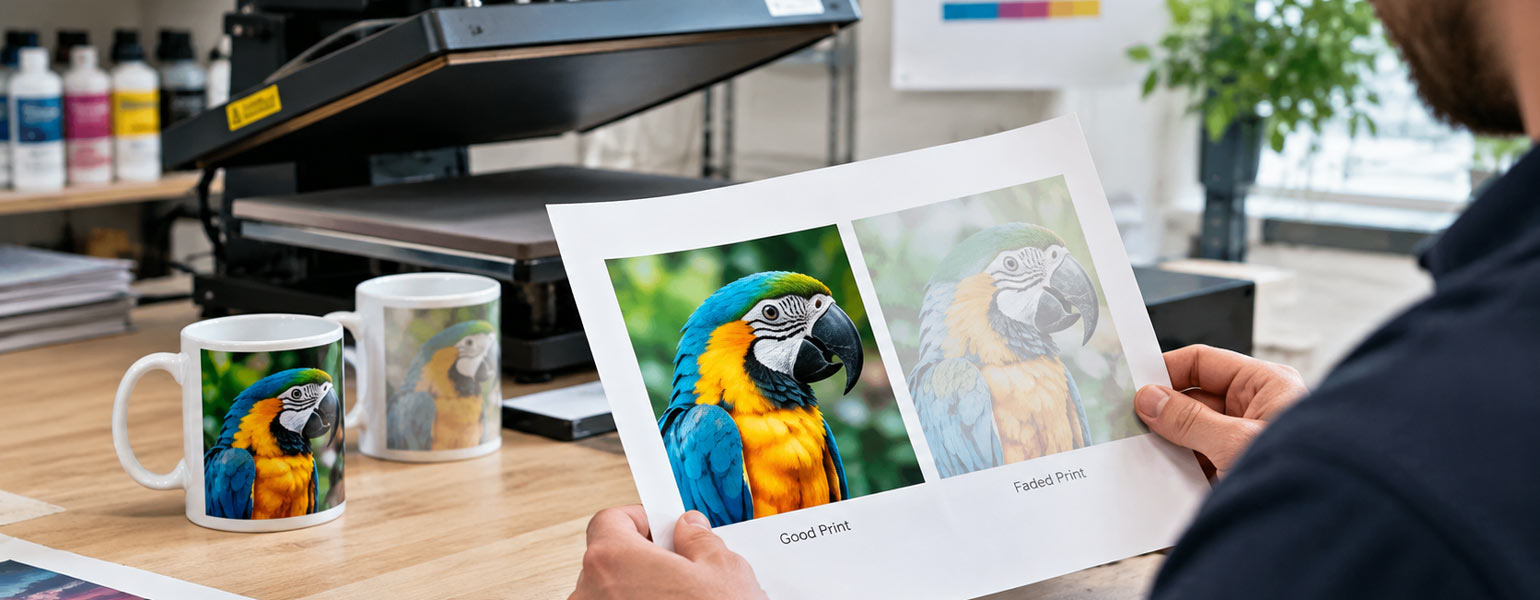
I remember speaking to someone who had just started a small sublimation business from their garage. They had ordered two different rolls of white polyester fabric from separate suppliers. Both were clearly labelled as 100% polyester, so they expected identical results.
The first roll produced bright colours, sharp details and barely needed any adjustments.
The second looked dull, felt rough to the touch, and even after increasing the pressing time, the colours still lacked the same vibrancy.
The immediate assumption was that the ink or printer must have been at fault.
It wasn’t.
The fabric was.
That’s when many newcomers discover something experienced print shops already know. Saying a fabric is made from 100% polyester tells you surprisingly little about how it will behave during sublimation.
The weave, surface finish, thickness, yarn construction and intended application all influence the final print.
Some polyester fabrics are designed to stretch with athletes during training.
Others are woven to survive years outdoors.
Some prioritise softness.
Others prioritise durability.
Understanding those differences can save a great deal of wasted material, unnecessary reprints and disappointed customers.
It can also help you choose products with better profit margins rather than simply buying the cheapest blank available.
In this guide, we’ll look at some of the most common polyester materials used in sublimation printing, explain where each performs best, highlight the pressing settings that usually work well, point out the mistakes beginners often make and discuss which options make the most sense if you’re running a small business.
Why Polyester Behaves So Differently
Before looking at individual materials, it’s worth understanding why polyester isn’t a single product.
Think about cotton.
A lightweight cotton T-shirt feels completely different from heavy canvas, even though both are cotton.
Polyester works the same way.
Manufacturers can spin polyester fibres into countless textures and constructions depending on the final product.
Some fabrics are knitted to maximise airflow.
Others are tightly woven for strength.
Some include moisture-management treatments.
Others receive coatings for water resistance.
Even though they all contain polyester, they react differently under a heat press.
That’s why copying somebody else’s pressing settings doesn’t always guarantee identical results.
Instead of memorising one “perfect” temperature or pressing time, it’s far better to understand how each material responds to heat and pressure.
Once you understand the fabric, troubleshooting becomes much easier.
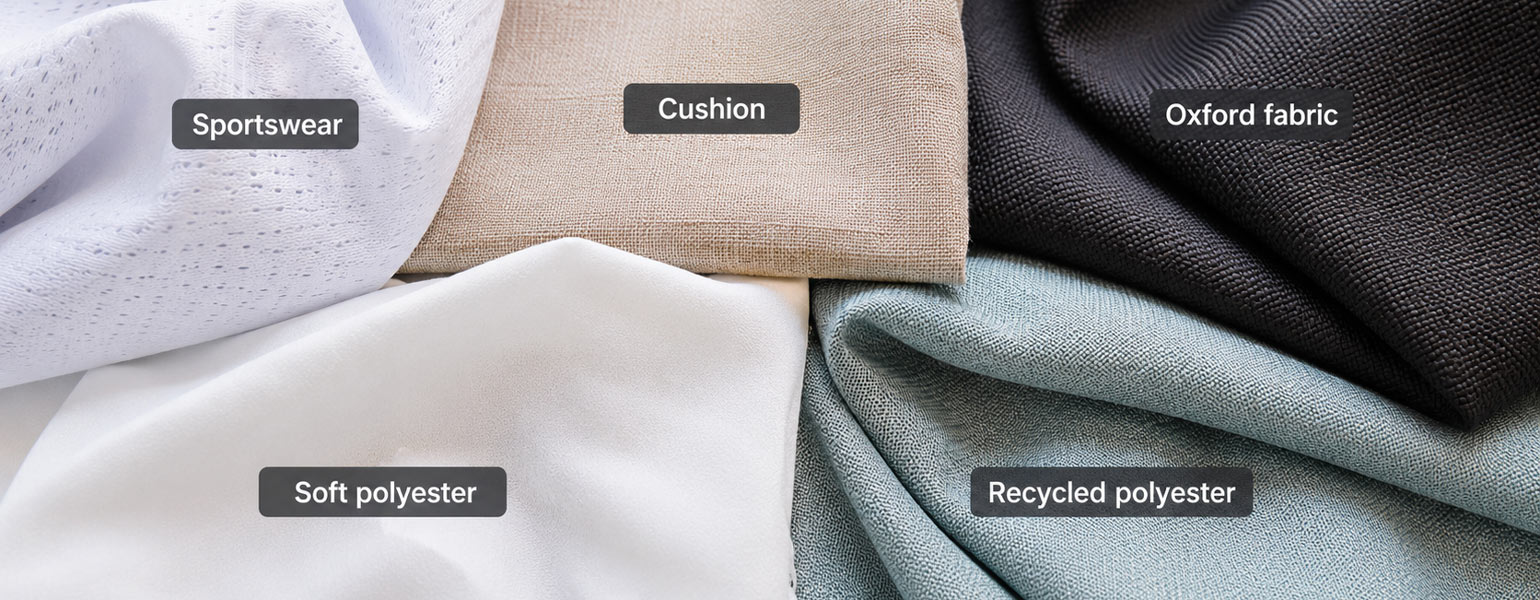
Sportswear Polyester Remains the Most Popular Choice
If someone asked me which polyester material most beginners will encounter first, sportswear fabric would probably top the list.
Sports jerseys, cycling tops, running shirts, football kits and gym clothing all rely heavily on polyester because it combines durability with excellent moisture management.
Unlike cotton, polyester doesn’t hold sweat in the same way. Instead, modern sports fabrics are engineered to move moisture away from the skin, helping garments dry quickly during exercise.
That makes sublimation the perfect decoration method.
Rather than sitting on top of the fabric like vinyl or screen printing, sublimation becomes part of the fibres themselves.
The finished design remains breathable, lightweight and won’t crack or peel after repeated washing.
For businesses, that’s a major selling point.
Customers buying personalised football shirts or cycling jerseys expect vibrant colours that last throughout an entire season.
Recommended Heat Press Settings
Most sports polyester performs well using the following starting point.
- Temperature around 190°C
- Pressing time between 45 and 60 seconds
- Medium pressure
These aren’t fixed rules, however.
Some premium performance fabrics are thinner and more heat-sensitive than standard polyester shirts.
Always test a sample before starting production, particularly when working with a new supplier.
Common Mistakes
One of the biggest mistakes is applying excessive pressure.
Many beginners believe harder pressure produces better transfers.
In reality, too much pressure can flatten breathable sports fabrics, leaving visible press marks around logos and graphics.
Another common issue is overheating lightweight performance materials.
If the fabric develops a shiny appearance after pressing, that’s usually a sign the temperature or pressing time is too high.
Reducing either slightly often solves the problem without sacrificing colour quality.
Cost and Profit Potential
Sportswear remains one of the strongest product categories for small sublimation businesses.
Blank polyester performance T-shirts are relatively affordable, while personalised garments can command healthy retail prices, particularly for sports clubs, charity events, schools and local businesses.
For anyone starting with a limited investment, sportswear often offers an excellent balance between production cost, customer demand and profit margin.
Soft Polyester Is the Go-To Choice for Home Décor Products
If sportswear dominates the clothing market, then soft polyester is arguably the most common fabric you’ll find in home décor.
It’s widely used for products such as:
- Cushion covers
- Throws
- Lightweight blankets
- Decorative wall hangings
- Table runners
- Fabric banners
One of the biggest reasons people like working with soft polyester is exactly what its name suggests. It feels pleasant.
Customers don’t just look at a cushion. They pick it up, squeeze it and imagine it sitting on their sofa. A rough fabric might print beautifully, but if it doesn’t feel comfortable, it’s unlikely to generate repeat business.
That’s why choosing the right polyester is about more than achieving vibrant colours.
Texture matters just as much.
Printing Characteristics
Compared with sports fabrics, soft polyester often has a smoother surface.
That usually means:
- Excellent image sharpness
- Strong colour saturation
- Fine photographic detail
- Smooth gradients
If you’re producing personalised gifts featuring family photos or pet portraits, soft polyester generally delivers some of the best results.
Recommended Heat Press Settings
A good starting point is:
- Temperature around 190°C
- Pressing time between 50 and 60 seconds
- Medium pressure
As always, every supplier is slightly different.
Some luxury fabrics have a thicker pile that may benefit from a few extra seconds, while thinner decorative fabrics may require a little less.
Mistakes Beginners Often Make
One issue I see quite regularly is people pressing directly onto fabric that has arrived folded inside a packet.
Even when the material looks flat, tiny wrinkles can create inconsistent transfers.
Taking five or ten seconds to pre-press the fabric removes moisture and smooths the surface before printing.
It’s a simple habit, but it saves a surprising number of failed transfers.
Another mistake is ignoring lint.
Unlike hard substrates, fabric naturally attracts dust, fibres and loose threads.
Those tiny particles often become visible after pressing, especially on white products.
A quick pass with a lint roller before every transfer is well worth the effort.
Cost and Profit Potential
Soft polyester is particularly attractive for small businesses because blank products remain relatively inexpensive.
Personalised cushion covers are especially popular for:
- Housewarming gifts
- Wedding presents
- Pet lovers
- Family photo gifts
- Seasonal decorations
The personalisation itself usually carries far more value than the blank product.
That makes this category ideal for sellers using Etsy, Shopify or independent online stores.
Polyester Cushion Fabric Isn’t Always the Same
This is something that catches many newcomers by surprise.
Two cushion covers can both be advertised as 100% polyester, yet feel completely different.
One may have a linen-style weave.
Another may feel silky smooth.
Others mimic canvas or brushed cotton.
All of them accept sublimation, but each produces a different finish.
That’s why it’s worth thinking about your customer before choosing your blank.
If you’re selling modern minimalist home décor, a smooth polyester finish often complements photographic prints beautifully.
If your designs feature rustic artwork or farmhouse-style illustrations, a textured linen-look polyester can create a warmer, more natural appearance.
Neither is objectively better.
They’re simply suited to different markets.
Heat Press Settings
Most polyester cushion covers work well at:
- Temperature around 190°C
- 50 to 60 seconds
- Medium pressure
For thicker-textured fabrics, ensure the transfer paper maintains full contact with the surface throughout pressing.
If gaps appear between the transfer and the fabric, fine details may lose definition.
Common Printing Problems
A frequent mistake is printing right up to the zip.
The thicker stitching around zips can slightly lift parts of the transfer during pressing.
Whenever possible, position artwork clear of bulky seams.
Another issue comes from uneven filling.
Some people press fully assembled cushions.
It’s almost always better to press the cover before inserting the cushion pad.
A flat surface produces far more consistent results.
Cost Versus Selling Price
Personalised cushions continue to perform well because they fit multiple occasions throughout the year.
Unlike Christmas-specific products, cushions sell consistently.
They work equally well for birthdays, anniversaries, Mother’s Day, Father’s Day, weddings and new homes.
That steady demand makes them a dependable product line for businesses wanting year-round sales.
Oxford Polyester Is Built for Durability
Oxford fabric occupies a completely different part of the sublimation market.
Rather than softness, its biggest strengths are durability and structure.
You’ll commonly see Oxford polyester used for:
- Outdoor banners
- Folding chairs
- Picnic mats
- Storage bags
- Tool bags
- Garden accessories
- Pet products
- Promotional displays
Its woven construction makes it far tougher than most decorative polyester fabrics.
Many Oxford materials also include water-resistant treatments, making them particularly suitable for outdoor use.
Printing Characteristics
Because the weave is more pronounced, photographs may not appear quite as smooth as they do on softer polyester.
However, bold logos, text and graphic designs reproduce extremely well.
This is one reason Oxford fabric remains popular for promotional products and commercial branding.
Recommended Heat Press Settings
Most Oxford polyester responds well to:
- Temperature between 195°C and 200°C
- Around 60 seconds
- Medium to firm pressure
Always check whether the material includes any waterproof coating.
Certain coated fabrics aren’t intended for sublimation and may produce disappointing results.
Common Mistakes
The biggest mistake is assuming every Oxford fabric is printable.
Many suppliers use similar names for fabrics with completely different surface treatments.
Before committing to a large order, always test one sample.
Another common issue involves uneven pressure.
Because Oxford fabric is thicker than sportswear or cushion fabric, worn heat press pads can sometimes create inconsistent transfers.
Checking pressure regularly becomes increasingly important with heavier materials.
Cost and Business Opportunities
Oxford polyester offers excellent opportunities for businesses targeting commercial customers rather than individual consumers.
Products such as branded equipment bags, promotional displays and outdoor event accessories generally command higher order values.
Although individual profit margins may vary, larger order quantities often make this category particularly attractive.
For small businesses hoping to move beyond one-off personalised gifts, Oxford products can provide a useful step towards B2B sales.
Recycled Polyester Is Becoming Increasingly Important
Over the past few years, one trend has become impossible to ignore.
Customers are asking more questions about sustainability.
That doesn’t necessarily mean every buyer expects fully eco-friendly production.
But more people do want to know where products come from and how they’re made.
That’s one reason recycled polyester has grown so quickly.
Rather than using newly produced polyester fibres, recycled polyester is commonly manufactured from recycled plastic bottles and other recovered materials.
From a sublimation perspective, the good news is that high-quality recycled polyester generally performs very similarly to conventional polyester.
Colour reproduction remains excellent, and the fibres still bond well with sublimation inks.
Heat Press Settings
Most recycled polyester fabrics can be pressed using settings similar to standard polyester:
- Around 190°C
- Between 45 and 60 seconds
- Medium pressure
As always, test first.
Different manufacturers use different yarn constructions, so small adjustments may improve results.
Common Misunderstandings
Some beginners assume recycled polyester is automatically lower quality.
That simply isn’t true.
Modern manufacturing has improved significantly, and many premium sportswear brands now use recycled polyester without sacrificing print quality or durability.
The bigger challenge is communicating its value to customers.
If you’re paying slightly more for sustainable blanks, make sure buyers understand why.
A simple product description explaining the material can often justify a higher selling price.
Is It Worth Selling?
For many independent sellers, the answer is increasingly yes.
You may not sell higher volumes immediately, but recycled polyester can help position your brand as more environmentally conscious.
That can be particularly valuable if your target audience includes younger consumers or businesses looking to improve their own sustainability credentials.
Which Polyester Material Makes the Most Sense for Your Business?
After working with different polyester products for a while, one thing becomes clear.
There isn’t a single “best” polyester fabric.
Instead, there’s the best choice for the type of customers you’re trying to reach.
One mistake I often see new sublimation businesses make is trying to sell everything at once. They’ll offer sportswear, home décor, bags, banners, flags, cushions and promotional products from day one. It sounds like a good strategy, but in reality, it usually spreads both time and budget too thin.
A much better approach is to become known for one or two product categories first, then expand as orders become more consistent.
Here’s how I’d compare the five polyester materials from a small business perspective.
Sportswear Polyester
Best for:
- Football clubs
- Schools
- Running events
- Gyms
- Cycling clubs
- Local businesses
Advantages
- Strong customer demand
- Repeat orders are common
- Excellent colour vibrancy
- Durable after washing
Challenges
- Competitive market
- Customers expect professional finishing
- Sizing and stock management require more planning
If you’re confident working with garments, sportswear offers some of the best opportunities for repeat business.
Soft Polyester
Best for:
- Etsy sellers
- Gift shops
- Home décor brands
- Personalised products
Advantages
- Easy to print
- High-quality photographic results
- Wide range of blank products
- Excellent for online selling
Challenges
- More seasonal trends
- Home décor styles change over time
This remains one of the easiest categories for beginners because production is straightforward and customers are often buying emotionally rather than purely on price.
Polyester Cushion Fabric
Although closely related to soft polyester, cushion covers deserve their own mention because they continue to perform well year after year.
They’re relatively inexpensive to stock, simple to personalise and appeal to a broad audience.
People buy cushions for birthdays, anniversaries, Mother’s Day, Father’s Day, weddings, Christmas, new homes and even as memorial gifts.
Few sublimation products work across so many different occasions.
For many small businesses, personalised cushions quietly become one of their most reliable sellers.
Oxford Polyester
Oxford fabric requires slightly more experience, but it also opens the door to different types of customers.
Rather than selling individual personalised gifts, you’re more likely to receive enquiries from businesses looking for branded products.
That could include:
- Event organisers
- Construction companies
- Schools
- Outdoor activity centres
- Local sports clubs
Commercial orders often involve higher quantities, making production more efficient and potentially increasing overall profitability.
Recycled Polyester
At the moment, recycled polyester probably won’t replace traditional polyester overnight.
Price is still an important factor for many buyers.
However, the market is changing.
More organisations now include sustainability within their purchasing decisions, and consumers are becoming increasingly aware of environmentally responsible products.
Offering recycled polyester doesn’t necessarily mean replacing your existing range.
Instead, it can give customers another option while helping your business stay ahead of future trends.
Heat Press Settings Are a Starting Point, Not a Rulebook
One question appears in almost every sublimation forum.
“What’s the perfect temperature for polyester?”
The honest answer is that there isn’t one.
If only it were that simple.
Even two fabrics supplied by the same manufacturer may require slight adjustments depending on thickness, weave and finishing treatments.
That said, the following settings provide a reliable starting point for most polyester materials.
| Material | Temperature | Time | Pressure |
| Sportswear Polyester | 190°C | 45–60 seconds | Medium |
| Soft Polyester | 190°C | 50–60 seconds | Medium |
| Polyester Cushion Fabric | 190°C | 50–60 seconds | Medium |
| Oxford Polyester | 195–200°C | Around 60 seconds | Medium to Firm |
| Recycled Polyester | 190°C | 45–60 seconds | Medium |
These figures should always be treated as a guide rather than fixed production settings.
Whenever you’re working with a new blank product, invest the extra few minutes in testing.
One successful test print is considerably cheaper than ruining twenty finished products.
Small Habits That Prevent Expensive Mistakes
After years in the sublimation industry, I’ve realised that successful printing isn’t usually about knowing complicated techniques.
More often than not, it’s about building consistent habits.
Here are a few that make a genuine difference.
Always Pre-Press Fabric
Even fabric that feels dry can contain moisture from storage or transport.
A short pre-press helps remove moisture, smooth out wrinkles and create a more consistent printing surface.
Keep Everything Clean
Dust, loose fibres and stray hairs become surprisingly obvious after sublimation, particularly on white polyester.
Using a lint roller before every press only takes a few seconds but saves countless frustrating reprints.
Record Your Successful Settings
Whenever you achieve excellent results with a particular product, write the settings down.
Temperature, pressing time, pressure, and even room conditions can all influence results.
Building your own reference guide is far more valuable than relying solely on generic recommendations online.
Buy Samples Before Buying in Bulk
It can be tempting to choose whichever supplier offers the lowest price.
Sometimes that’s the right decision.
Sometimes it isn’t.
Ordering a small sample first allows you to check print quality, stitching, consistency and overall finish before investing in larger quantities.
That small step often prevents much bigger problems later.
Where Should Beginners Invest Their Budget?
If someone asked me how to spend a limited sublimation budget today, I’d recommend keeping things simple.
Start with products that are affordable, easy to print and sell throughout the year.
A combination like this offers a balanced product range:
- Sports T-shirts
- Cushion covers
- Tote bags
- Mouse mats
- Ceramic mugs
These products don’t require huge investments, yet they allow you to build experience across different substrates while creating a catalogue that appeals to a wide audience.
As your confidence grows, you can gradually introduce products made from Oxford polyester, recycled polyester or more specialised performance fabrics.
Growing steadily is usually far more sustainable than trying to launch dozens of product categories all at once.
Choosing Better Materials Often Matters More Than Buying Better Equipment
It’s natural for beginners to focus on printers and heat presses.
Those machines are important.
But even the most advanced equipment can’t compensate for poor-quality blanks.
High-quality polyester produces brighter colours, sharper detail and more consistent results from the very first press.
Customers notice those differences, even if they can’t always explain why.
That’s why experienced sublimation businesses often spend just as much time choosing reliable blank products as they do selecting printers or inks.
If you’re looking to expand your sublimation business, Signzworld offers a wide range of professional sublimation supplies, including polyester blanks, ceramic mugs, heat transfer paper, sublimation inks and dependable heat press machines suitable for businesses of every size. Whether you’re producing personalised gifts from home or managing larger commercial orders, using consistent materials and reliable equipment makes every stage of production more predictable and helps deliver the quality your customers expect.
The more you work with different polyester materials, the more you’ll appreciate that 100% polyester is only the beginning of the story. Understanding how each fabric behaves under heat, where it performs best and which markets it serves will ultimately have a far greater impact on your business than simply memorising a set of pressing temperatures. That’s the knowledge that turns fewer wasted blanks into better products, happier customers and healthier profit margins over the long term.