


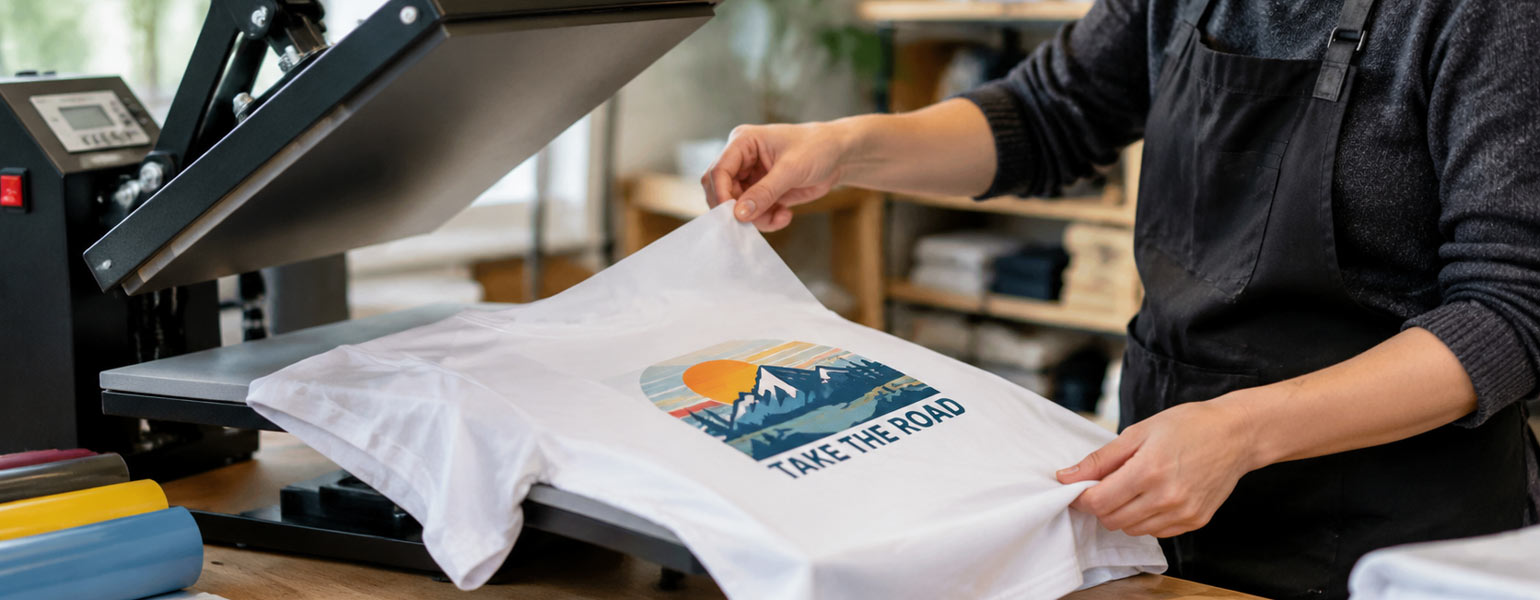
You’ve checked the temperature, set the timer, adjusted the pressure and made sure your materials are suitable for the job. Your heat press is working properly, the design is spot on, and everything looks ready to go. Yet, when you lift the platen, something isn’t quite right. Perhaps the print has shifted slightly, an edge is lifting or the finish simply isn’t what you expected.
It’s frustrating, especially when you’ve already checked all the usual things.
When a heat transfer goes wrong, people often revisit temperature, time, and pressure first. They certainly matter, but they don’t explain every problem. Sometimes, the difference between a clean, consistent result and a disappointing one comes down to small details: how the transfer is handled, the condition of the material, or how evenly heat and pressure are applied.
These are five factors worth paying closer attention to, whether you run a printing business or use a heat press for personal projects at home.
1. How You Open the Heat Press Can Affect the Finish
Opening a heat press seems straightforward. The timer finishes, you lift the handle and move on to the next item. However, the way you open the press and handle the product immediately afterwards can affect the result.
Sublimation printing provides a good example. If the transfer paper shifts while the product is still hot, even a slight movement can leave a faint shadow or doubled edge. This is particularly noticeable with fine lettering, sharp outlines and detailed designs. The original positioning may have been perfect, but the finished image can still look blurred.
HTV presents a slightly different challenge. The carrier sheet must be removed according to the manufacturer’s instructions. Catching an edge or pulling the carrier away at the wrong temperature can cause part of the design to lift with it. With Puff HTV, unnecessary rubbing or compression can also affect the raised finish.
The key is to open the press smoothly and keep the product, paper and carrier sheet as stable as possible. Avoid dragging anything across the freshly pressed surface, and don’t rush to peel the carrier simply because the pressing cycle has finished.
There is no single opening speed or peeling method that suits every material. What matters is understanding how your particular transfer behaves and handling it accordingly.
2. Cooling and Peeling Require the Right Timing
Once the press opens, it’s tempting to assume the difficult part is over. In reality, some transfers need careful handling before they’re ready to use.
Different materials respond differently as they cool, so applying the same peeling method to every transfer can lead to inconsistent results.
Why peeling temperature matters
HTV products may require a hot, warm or cold peel. These terms describe when the carrier sheet should be removed, and the instructions are not interchangeable.
With a cold-peel material, the transfer needs to cool sufficiently before the carrier is removed. Peeling too early can cause the vinyl to lift, stretch or lose contact with the fabric. A hot-peel product, by contrast, is designed to have its carrier removed while the transfer is still hot.
If a design looks perfect during pressing but starts lifting as you remove the carrier, check the recommended peeling temperature before changing the machine settings.
Sublimation works differently. The dye transfers into a suitable polyester surface or polymer coating rather than relying on the same adhesive process as HTV. Here, preventing the transfer paper from moving is often the greater concern. There is no universal cold-peel rule for sublimation.
What happens as the material cools?
Heat can also affect the dimensions and behaviour of the materials involved. Fabric, transfer films and adhesive layers may expand or contract differently as their temperatures change. Stretching or moving them while they’re still hot can introduce unwanted stress, potentially contributing to distortion or poor adhesion.
Puff HTV requires particular care because its raised finish depends on the material expanding correctly. Excessive heat or an unsuitable second press can flatten the effect. Cooling alone isn’t necessarily the cause, but handling the transfer before it has stabilised can make matters worse.
Always follow the manufacturer’s instructions for peeling, cooling and any additional pressing. If you’re trying a new transfer for the first time, test a sample rather than assuming the method used for your usual HTV will work just as well.
3. Moisture Can Affect Results Even When Materials Are Stored Properly
Moisture is easy to overlook because a blank garment or transfer sheet can look and feel completely dry.
It’s also worth clearing up a common misconception: moisture-related problems don’t necessarily mean you’ve stored your materials incorrectly. Many materials naturally absorb small amounts of water vapour from the surrounding air. This is a normal property of materials such as textiles and paper, and it can happen even when everything is stored sensibly.
The amount absorbed depends on the material, the humidity and the surrounding conditions. You can’t eliminate this natural moisture absorption entirely, but you can take steps to minimise its effect on the transfer process.
When exposed to the high temperatures used in heat transfer printing, residual moisture can turn into vapour and interfere with the transfer.
In sublimation printing, this may contribute to uneven colour, blurred details or faint marks across the design. Moisture can also cause transfer paper to curl or become wavy, making it harder to maintain consistent contact with the product.
With HTV, damp fabric can sometimes interfere with adhesion, particularly if the garment hasn’t been prepared properly before pressing.
Why pre-pressing can help
For many suitable garments, a short pre-press helps remove residual moisture and smooth out wrinkles before the transfer is applied. It also creates a flatter working surface, which helps the transfer make consistent contact with the fabric.
This doesn’t mean every garment has been stored badly or needs extensive preparation. Even a freshly unpacked blank can contain a small amount of moisture absorbed from the air. Pre-pressing is simply one way to account for this before it becomes a problem.
The exact approach depends on the material. A pre-press suitable for a cotton T-shirt may not be appropriate for a coated item or a heat-sensitive fabric, so check the manufacturer’s recommendations.
Transfer paper also benefits from sensible storage in conditions that limit unnecessary exposure to humidity. If you regularly experience curling paper or inconsistent results, consider both the paper’s condition and the environment in which you’re working.
When the same design produces good results one day but inconsistent results another, despite apparently identical settings, moisture and environmental conditions are worth investigating.
4. The Pressure Setting May Be Right, but the Pressure Distribution May Not Be
A heat press can be set to the recommended pressure and still fail to apply it evenly across the entire design.
This often becomes apparent when pressing garments with thick seams, collars, pockets or uneven surfaces. A raised seam can prevent the surrounding fabric from sitting flat, leaving parts of the transfer with less contact than others.
The result may be HTV with edges that lift in certain places or a transfer that appears inconsistent across its surface. If the same problem keeps occurring in the same area of a garment, the positioning itself may be contributing to the issue.
Look beyond the pressure dial
Start by checking that the garment lies flat and that the platen is level. If a seam, zip or pocket creates an uneven surface, a suitable heat press pillow or pressing pad may help compensate for the difference in height. Make sure the accessory is appropriate for the material and application.
It’s also worth checking the press itself. Incorrect platen alignment, worn components or an adjustment mechanism that distributes pressure unevenly can produce inconsistent results.
Increasing the overall pressure isn’t always the answer. Too much pressure can damage certain materials, flatten raised effects or leave unwanted marks. The aim is even contact across the transfer, not simply the highest pressure the machine can deliver.
With sublimation, poor contact can also affect the result, particularly on uneven or curved surfaces. However, pressure should be assessed alongside the product’s coating, positioning and temperature distribution rather than treated as the only possible cause.
5. Not Every Transfer Material Is Suitable for Every Surface
Sometimes the problem isn’t the operator or the machine. It’s the combination of materials being used.
Heat transfer printing covers several different processes, each with its own requirements. A transfer that works beautifully on one fabric may perform poorly on another, even if the two garments look similar.
Sublimation is a good example. The dye needs a suitable polyester-rich fabric or compatible polymer-coated surface to produce the intended result. Printing a conventional sublimation design onto untreated cotton won’t give the same vibrant, durable finish as printing onto suitable polyester fabric.
HTV offers more flexibility, but not every vinyl is suitable for every garment. Some products are designed for cotton and polyester blends, while others are better suited to stretch fabrics or particular performance textiles. Special finishes, water-repellent coatings and heat-sensitive materials may require a specific product or application method.
Silicone transfers introduce another consideration. A transfer designed for one type of garment may not adhere reliably to another, so checking the manufacturer’s compatibility guidance is essential.
Check compatibility before adjusting the press
If a transfer repeatedly lifts, cracks or fails to achieve the expected finish, check the material specifications before experimenting with more heat or pressure.
Consider the fabric composition, surface coating, stretch characteristics and heat tolerance. Then check the transfer’s recommended applications and pressing instructions.
When trying a new combination, use a sample garment or spare material first. Examine the finish after pressing, then check adhesion and appearance after the recommended settling period. If wash durability matters, carry out a suitable wash test before committing to a larger production run.
For a printing business, a few minutes spent checking compatibility can save considerably more time than reworking a batch of garments that never had a good chance of transferring correctly.
Look at the Whole Process, Not Just the Settings
When a transfer doesn’t turn out as expected, it’s natural to question the temperature, timer or pressure first. Those settings remain essential, but they’re only part of the process.
Paper movement, peeling temperature, residual moisture, uneven pressure and material compatibility can all affect the finished result. Each has a different cause, so identifying the problem is more useful than changing several settings at once.
Check one factor at a time and keep a note of what changes. With a little methodical troubleshooting, it’s much easier to identify the cause and repeat a successful result.
At Signzworld, we supply heat press machines, HTV, sublimation blanks and other heat transfer printing essentials for UK businesses and home users. Choosing the right materials and understanding how they behave are both important parts of achieving a consistent finish.


