If you’re even slightly into streetwear, there’s a good chance you’ve heard people mention Puff Vinyl recently.
It’s one of those materials that kind of crept in over the past couple of years. No big announcement, no sudden boom. Just more and more people are trying it, posting it, and eventually selling it.
At first, many people dismissed it as another short-lived TikTok trend. Something that looked cool for ten seconds in a short video, but would disappear once the hype faded. That did not happen.
Instead, Puff Vinyl slowly moved from small creator videos into real products people were actually buying. Streetwear brands started using it for oversized logos. Etsy sellers began offering 3D personalised hoodies. Small businesses added puff text to workwear and caps to make their designs feel more premium without changing the entire production process.
Now it is everywhere.
If you spend enough time on TikTok, Reddit, or even UK craft Facebook groups, you will probably notice the same thing happening over and over again. Someone buys Puff Vinyl for the first time, presses a shirt, ruins the design completely, and posts photos asking what went wrong.
That is part of the reason Puff Vinyl became such a conversation topic in the first place. When it works, it looks amazing. When it fails, it fails dramatically.
And honestly, that is what makes it interesting.
What Puff Vinyl Actually Is
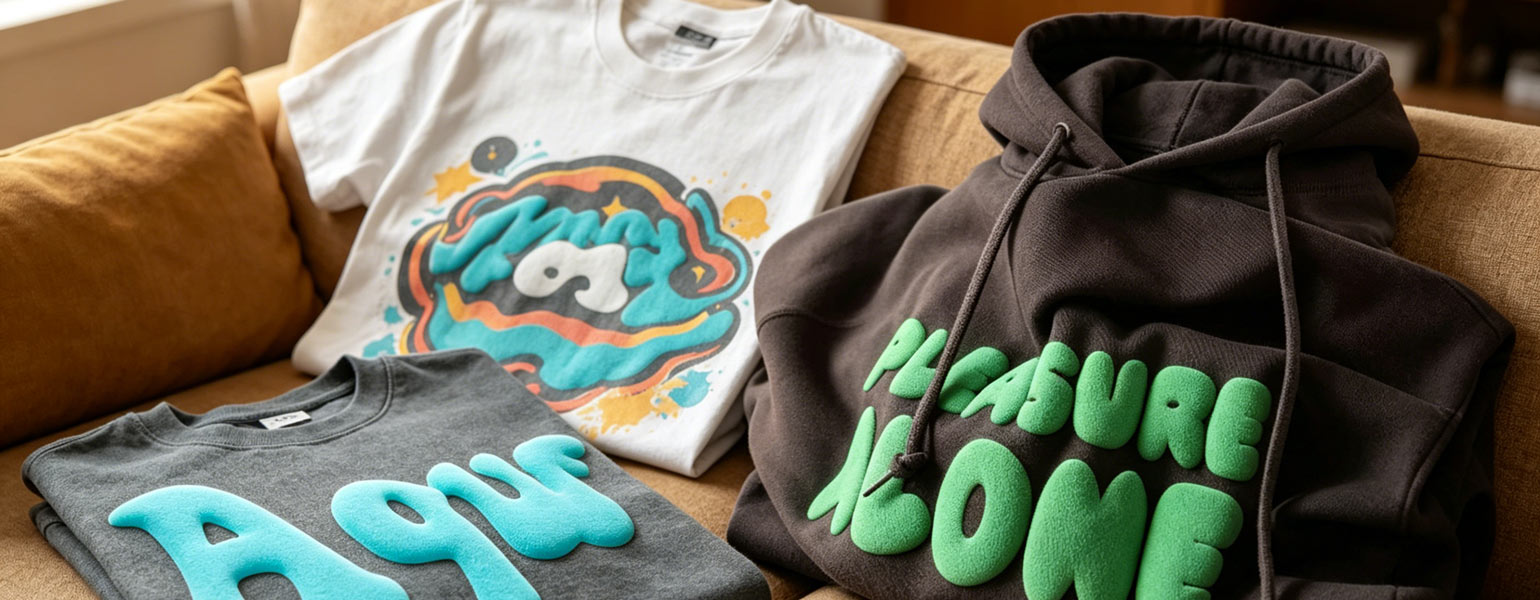
Puff Vinyl is a type of heat transfer vinyl that expands when exposed to heat during the pressing process. Unlike standard HTV, which stays flat against the fabric, Puff Vinyl rises and creates a soft 3D texture.
The effect is almost foam-like.
Instead of looking printed onto the garment, the design becomes part of the garment itself. It adds depth, shadows, texture, and a slightly raised hand feel that immediately makes even simple graphics stand out more.
That is why a basic one-word hoodie made with Puff Vinyl often looks far more expensive than the same design made with regular HTV.
The difference is surprisingly dramatic.
A plain white text logo on a black hoodie can suddenly look like something from a boutique streetwear brand instead of a home craft project.
That visual upgrade is the reason Puff Vinyl exploded in popularity.
People are constantly looking for ways to make products feel more premium without massively increasing production costs. Puff Vinyl happens to do exactly that.
Why Puff Vinyl Became So Popular
Part of it is fashion trends.
Minimalist oversized logos are everywhere right now. Y2K-inspired graphics are back. Varsity lettering, bubble fonts, cartoon graphics, and chunky typography have all returned in a huge way.
Puff Vinyl fits perfectly into that style.
Flat vinyl sometimes looks too clean or too thin for modern streetwear aesthetics. Puff Vinyl adds dimension and softness that feels more current.
The other reason is social media.
Puff Vinyl is incredibly satisfying to watch during the pressing process. Videos showing the vinyl expanding under heat regularly go viral because people love transformation content.
A flat design suddenly rising into thick textured lettering feels oddly addictive to watch.
That alone created thousands of videos across TikTok and Instagram Reels.
Then came the Reddit effect.
Once enough beginners started trying it, entire discussion threads appeared with titles like:
“I completely destroyed my first Puff Vinyl shirt.”
“Why did my Puff Vinyl melt?”
“Why is my puff not puffing?”
“My design expanded too much and looks awful.”
And honestly, those posts helped the trend even more because they made Puff Vinyl feel like a real craft skill instead of a simple beginner material.
People became curious.
Puff Vinyl vs Regular HTV
The easiest way to understand Puff Vinyl is to compare it directly with standard heat transfer vinyl.
Regular HTV is reliable, predictable, and beginner-friendly. You cut it, weed it, press it, peel it, and usually get decent results even if your settings are slightly wrong.
Puff Vinyl is far less forgiving.
It reacts heavily to temperature, pressure, and pressing time. Small mistakes become very visible.
Still, the visual payoff can be worth it.
Here is where the two materials really differ.
Appearance
Regular HTV stays flat and smooth. Puff Vinyl expands upward and creates a raised effect.
This instantly changes how the design catches light and shadows. It gives garments more depth and texture.
Feel
Standard vinyl can sometimes feel slightly plastic, depending on the brand.
Puff Vinyl usually feels softer and more dimensional after pressing.
Design Style
Regular HTV works well for detailed graphics, thin lines, and small text.
Puff Vinyl works best with bold shapes and larger lettering.
Tiny details often disappear once the material expands.
Difficulty
Regular HTV is one of the easiest materials for beginners.
Puff Vinyl has a learning curve.
A lot of people underestimate that.
Margin Potential
This is where things get interesting.
In the UK market, products using Puff Vinyl often sell for noticeably higher prices because customers associate the effect with boutique fashion brands.
The production cost increase is relatively small, but the perceived value increase is quite large.
That matters for small businesses.
What Products Work Best With Puff Vinyl
Not every product suits Puff Vinyl.
Some designs become awkward or messy once the material expands.
The best Puff Vinyl products usually share one thing in common. Simplicity.
Large clean shapes almost always work better than complicated artwork.
Some of the most popular applications right now include:
- Oversized hoodie logos
- Streetwear-style T-shirts
- Varsity text designs
- Puff name hoodies
- Children’s clothing
- Caps with leather-style patches
- Tote bags
- Small business branding apparel
- Festival merchandise
- Gym wear
- Cartoon-style graphics
- Y2K-inspired fashion pieces
Puff Vinyl also works especially well on heavyweight cotton garments because thicker fabrics help support the raised texture.
On very thin shirts, the expansion can sometimes feel unstable or overly soft.
The Most Important Thing Nobody Tells Beginners
Puff Vinyl is not regular HTV with a different texture.
That mindset causes most beginner mistakes.
A lot of people assume they can use their normal vinyl settings and get the same results.
Then everything goes wrong.
Either the vinyl barely expands at all, or it over-expands and loses shape completely.
This material is extremely sensitive to heat management.
Even experienced heat press users sometimes struggle during their first attempts.
Heat Press Settings for Puff Vinyl
Different brands recommend slightly different settings, but most Puff Vinyl works within a similar range.
If you are trying Puff Vinyl for the first time, it’s a good idea to test your setup before moving on to the final products. Start by using a scrap piece of fabric or an old shirt. Begin with the recommended settings from your vinyl supplier. Then, adjust one variable at a time—such as temperature, pressure, or pressing time—and note the results after each press. Watching how the vinyl reacts with every change will help you quickly identify what works best with your equipment and material. This simple test process can save you from wasted garments and frustration later.
For cotton garments, a common starting point is:
- Temperature around 145°C to 155°C
- Press time around 10 to 15 seconds
- Medium pressure
That sounds simple enough.
The problem is that Puff Vinyl reacts differently depending on:
- Fabric thickness
- Humidity
- Heat press quality
- Pressure consistency
- Design size
- Layering
- Garment colour
- Vinyl brand
That is why experienced users rarely trust generic online settings completely.
They test first.
Always.
Why Pressure Matters More Than People Expect
Beginners usually focus only on temperature.
Pressure is just as important.
Too much pressure can flatten the puff effect before it fully expands.
Too little pressure can cause uneven lifting and poor adhesion.
This becomes especially obvious with large lettering.
One side puffs correctly while another side stays flat.
That is usually a pressure issue rather than a temperature issue.
A quality heat press machine makes a huge difference here because even pressure distribution matters more with Puff Vinyl than with standard HTV.
Cheap uneven presses often create inconsistent results.
The Biggest Puff Vinyl Mistakes
You can almost predict the most common Reddit disaster posts before reading them.
“My Puff Vinyl Melted”
Usually caused by too much heat or too much pressing time.
Puff Vinyl does not need aggressive pressing.
Long presses often destroy the texture completely.
“It Did Not Puff At All”
This usually happens because:
- The temperature was too low
- The pressure was too high
- The protective sheet blocked too much heat
- The wrong side was pressed
- The vinyl brand required a higher activation temperature
“The Design Expanded Too Much”
This is extremely common with thin fonts.
People design graphics the same way they would for regular HTV.
Then the letters swell together and become unreadable.
Puff Vinyl needs breathing room.
Spacing matters.
“It Peeled After Washing”
Normally caused by:
- Insufficient pressure
- Low heat
- Poor fabric compatibility
- Peeling too early
- Cheap vinyl quality
“The Edges Look Rough”
This often happens because:
- Blade depth was incorrect
- Cuts were too detailed
- The design was too small
- Vinyl over-expanded
Again, Puff Vinyl rewards simplicity.
Is Puff Vinyl beginner-friendly?
Honestly, yes and no.
The actual process is not complicated.
But the margin for error is smaller than most beginners expect.
If someone has never used HTV before, Puff Vinyl can feel frustrating very quickly.
That is why many experienced sellers recommend learning standard HTV first.
Once you understand:
- pressure
- peeling timing
- fabric reactions
- heat consistency
Then Puff Vinyl becomes much easier.
That said, beginners who are patient usually figure it out after a few test shirts.
The bigger issue is unrealistic expectations created by social media.
TikTok compresses the learning process into fifteen seconds.
Real production does not work like that.
Is Puff Vinyl Profitable in the UK Market?
Right now, yes.
Especially for:
- Etsy sellers
- small streetwear brands
- local personalised clothing businesses
- TikTok shops
- custom hoodie stores
Customers clearly perceive Puff Vinyl products as more premium.
That matters more than people realise.
A hoodie with standard vinyl might sell for £20 to £25.
The same hoodie with well-executed Puff Vinyl branding can often sell for noticeably more because it looks more fashion-oriented.
The material itself is more expensive than regular HTV, but not dramatically so.
The real cost comes from:
- testing
- wasted garments
- failed presses
- learning time
Once the process becomes consistent, profit margins can actually become quite attractive.
Especially because Puff Vinyl designs are often visually simple.
Large text logos are faster to cut and weed compared to intricate layered graphics.
The Reality Behind the Trend
Some people online talk about Puff Vinyl as if it is replacing every other heat transfer material.
That is not realistic.
Regular HTV still makes far more sense for:
- detailed logos
- small text
- sportswear numbering
- fast production work
- beginner projects
- multi-colour layering
Puff Vinyl is more of a specialist material.
It shines in fashion-oriented designs where texture becomes part of the product identity.
And honestly, that is probably why people like it so much right now.
In a market flooded with flat digital prints, texture suddenly feels fresh again.
Where Heat Press Quality Starts To Matter
One thing many beginners discover very quickly is that Puff Vinyl exposes weaknesses in equipment.
A cheap, inconsistent press that works “well enough” for standard HTV may suddenly struggle badly with Puff Vinyl.
Uneven heating becomes visible immediately.
Pressure inconsistency becomes obvious immediately.
That is why many small businesses upgrading into Puff Vinyl eventually start paying closer attention to:
- heat press build quality
- platen consistency
- pressure adjustment
- temperature accuracy
Reliable equipment simply reduces wasted products.
For businesses producing apparel regularly, that matters a lot over time.
Companies like Signzworld have become popular with many small custom printing businesses because they offer a wide range of heat press machines, sublimation blanks, vinyl tools, and starter equipment without making the entire process feel overly industrial or intimidating.
Even if Puff Vinyl itself is still a newer category for many suppliers, having a dependable press setup makes the learning curve much smoother.
And honestly, once people successfully make their first good Puff Vinyl hoodie, they usually understand immediately why the material became so popular in the first place.