


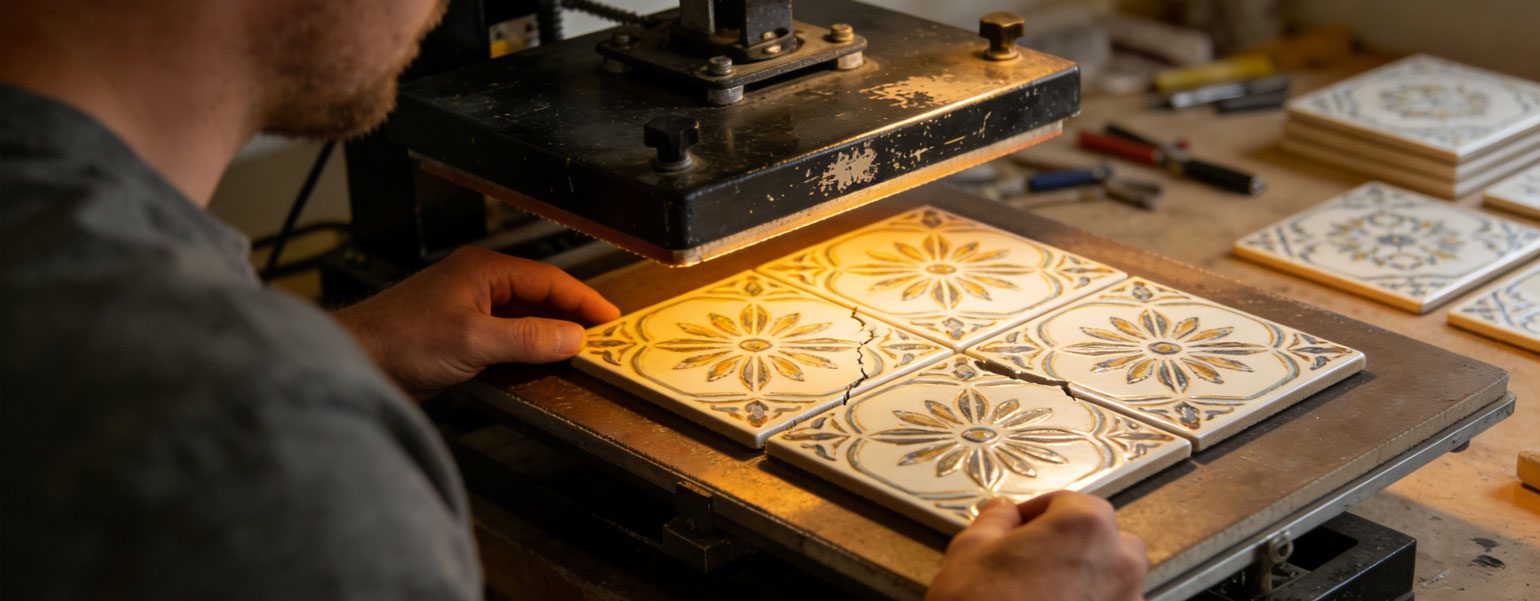
Ceramic tiles may not be the first material people think of, but in the UK sublimation scene, they’re a popular option for creating personalised gifts and decorative pieces. From personalised kitchen backsplashes to custom bathroom accents, and even full-on memory walls in living rooms or hallways, they offer a unique way to turn everyday spaces into something meaningful. Some homeowners take it a step further by designing custom floor tiles for entryways or garden rooms, adding a personal touch that feels both practical and artistic.
With sublimation printing, it’s never been easier to bring those ideas to life. You design your artwork, follow a simple online tutorial, press the tile… and then—crack. That sharp, sudden sound no one wants to hear. The tile splits, sometimes instantly, sometimes moments after lifting the heat press.
So what actually went wrong?
Let’s break it down properly—because in most cases, cracked ceramic tiles aren’t bad luck. They’re preventable.
Why Do Ceramic Tiles Crack During Sublimation?
There isn’t just one cause. It’s usually a mix of heat stress, pressure issues, and material limitations. Here are the most common culprits.
1. Thermal Shock: The #1 Reason
Ceramic tiles don’t like sudden temperature changes. When you take a room-temperature tile and expose it to high heat (typically around 180–200°C), the material expands rapidly. If that expansion isn’t even or happens too fast, the tile can crack.
What makes it worse:
- Cold workshop environments (very common in the UK)
- Placing tiles directly into a fully heated press
- Removing them and exposing them to cold air too quickly
How to fix it:
- Preheat the tile for 10–15 seconds before applying your transfer
- Avoid extreme temperature jumps
- After pressing, let the tile cool gradually—don’t move it to a cold surface immediately
→ Think of it like glassware: sudden temperature shifts = stress fractures.
2. Uneven Pressure from the Heat Press
Tiles are rigid. Unlike fabric or mugs, they don’t flex to absorb pressure. If your heat press isn’t perfectly level, or if pressure is too high, certain points on the tile take more force than others.
That uneven stress? It can literally snap the tile.
Common signs:
- Cracks starting from corners or edges
- Hairline fractures after pressing
- Tiles break only under certain placements
How to fix it:
- Use a heat-resistant foam pad or silicone mat underneath
- Reduce pressure slightly—tiles need medium, not heavy pressure
- Make sure your press platen is level and evenly heated
3. Poor Quality or Unsuitable Tiles
Not all ceramic tiles are created equal—this is a big one.
Some cheaper tiles are:
- Not designed for high heat
- Structurally weaker
- Inconsistent in thickness
Even worse, some don’t have a proper sublimation coating, which can lead to uneven heat distribution.
How to fix it:
- Always use sublimation-coated ceramic tiles. Not sure how to spot them? Look for tiles that are labeled as “sublimation blank” on the packaging, or mention a special polymer or polyester coating in the product description. Coated tiles often have a slightly glossier surface compared to regular tiles, and they may arrive with a protective film you peel off before use. If you’re buying in person, ask the supplier or check for clear instructions that mention they’re suitable for sublimation printing.
- Buy from reliable suppliers
- Check thickness—tiles that are too thin are more prone to cracking
4. Incorrect Temperature or Time Settings
Going too hot or too long doesn’t make your print “better”—it just increases the risk of damage.
Typical mistake:
“If I add 20 seconds, the colour will pop more.”
Reality:
→ You’re just stressing the tile further.
Safe guideline:
- Temperature: 180–200°C
- Time: 180–240 seconds (depending on tile thickness)
Pro tip:
If you’re unsure, test with one tile first before running a batch. If your test tile cracks, take a moment to troubleshoot before continuing. Check if your press pressure might be too high, confirm that your temperature and time settings are within the recommended range, and inspect the tile itself to ensure it’s sublimation-coated and not too thin. Also, verify you are using a suitable pad or cushion under the tile. Making a small adjustment to any of these factors can prevent further breaks and help you get a clean result on the rest of your tiles.
5. No Cushioning or Support
Pressing a tile directly on a hard metal platen is asking for trouble. There’s no give, no shock absorption—so all the stress goes straight into the ceramic.
How to fix it:
- Use a Nomex pad, silicone sheet, or Teflon cushion
- Ensure even contact across the entire surface
6. Moisture Inside the Tile
This one often surprises many people.
Ceramic is slightly porous. If the tile has absorbed moisture, heating it can cause that moisture to expand—leading to internal pressure and cracking.
How to fix it:
- Store tiles in a dry environment
- Preheat briefly to drive off any moisture before pressing
How to Prevent Cracking: A Simple Workflow
If you want a “safe process” to follow every time, here’s a reliable setup:
- Preheat tile (10–15 seconds)
- Place on a padded surface
- Apply transfer paper securely
- Use medium pressure
- Press at the correct temp/time
- Remove and let cool slowly on a flat surface
→ No sudden moves. No shortcuts.
Aftercare: Keeping Your Sublimated Tiles Looking Great
Once your tile is successfully printed, you’ll want it to last—especially if it’s part of a decorative wall or a sentimental piece.
Daily care tips:
- Clean with a soft cloth and mild detergent
- Avoid abrasive scrubbers
- Keep away from harsh chemicals
- For display tiles, avoid direct prolonged sunlight
→ If used in kitchens or bathrooms, they’re generally durable—but treat them like decorative surfaces, not heavy-duty flooring unless specifically rated for it.
FAQ: Common Other Questions
1. Can I use any ceramic tile for sublimation?
No. You need specially coated sublimation tiles. Regular tiles won’t hold the ink properly and are more likely to crack under heat.
2. Why does my print look fine, but cracks appear later?
This usually means internal stress from uneven heating or pressure. The tile survives the press—but fails during cooling.
3. Can I sublimate on tiles for outdoor use in the UK?
Yes—but choose tiles designed for outdoor durability. The UK’s weather (rain, temperature swings) can affect longevity, so sealing or protective placement is recommended.
Final Thoughts
Cracking tiles can feel frustrating—especially when everything else seems right. But once you understand the mechanics behind it, it’s actually quite manageable.
In most cases, it comes down to:
- Controlling temperature changes
- Using proper pressure
- Choosing the right materials
Get those three right, and your success rate will jump significantly.
If you’re serious about sublimation—whether as a hobby or a growing business—working with reliable equipment and materials makes all the difference. Brands like Signzworld have built a solid reputation in the UK for supplying consistent, high-quality sublimation blanks, heat presses, and accessories. Having dependable gear takes a lot of the guesswork out of the process—so you can focus on creating, not troubleshooting.


