


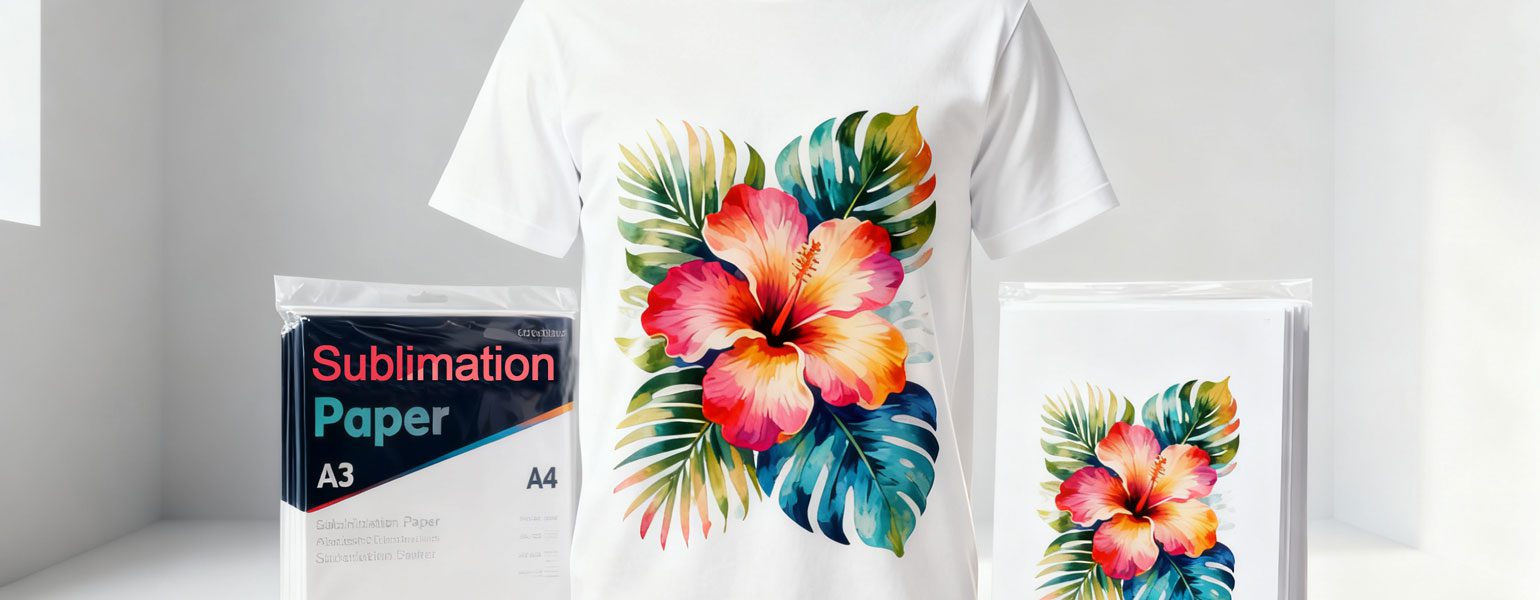
When you first step into the world of sublimation printing, it’s easy to assume that any paper will get the job done. After all, standard printing looks perfectly fine on everyday office paper. But the moment you attempt sublimation using regular copy paper, you’ll quickly discover the results are dull, patchy, and nowhere near as vibrant as you expected. That’s because sublimation paper and regular printer paper are designed for completely different purposes, and understanding the difference can dramatically improve your print quality and overall success.
In this guide, we’ll look at what sets sublimation paper apart, why GSM matters, how to choose the right type for your equipment, and which projects each paper is best suited for.
What Is Sublimation Paper?
Sublimation paper is a specially coated medium designed to hold and release sublimation ink efficiently. Unlike regular paper, which absorbs ink into its fibres, sublimation paper keeps the ink on the surface until it’s transferred onto a substrate through heat and pressure. This ensures high colour density, crisp detail, and minimal bleeding.
The coating is the heart of sublimation paper. It controls ink absorption, drying speed, and transfer rate, meaning that the better the coating, the more precise and vibrant your final results will be.
How Regular Printer Paper Behaves Differently
Regular A4 copy paper—what you’d use for letters, invoices or schoolwork—is engineered to absorb and lock in water-based inks. This makes it ideal for everyday document printing but completely unsuitable for sublimation.
If used for sublimation, the ink soaks into the paper, leaving very little to transfer during pressing. The result?
- Faded colours
- Low contrast
- Patchy or uneven prints
- Slower drying time
- Potential damage to your heat press due to ink leakage
Simply put: regular paper is not designed to release ink, while sublimation paper is designed for exactly that.
Why GSM Matters
You’ll often see sublimation paper described as 100gsm, 120gsm, 125gsm, or 140gsm. GSM means grams per square metre, essentially indicating the thickness and weight of the paper.
Here’s how GSM influences performance:
100gsm
- Lightweight and versatile
- Faster drying
- Ideal for high-speed desktop printers
- Perfect for smaller items such as mugs, coasters, and keyrings
120–125gsm
- More rigid
- Holds more ink
- Suitable for textiles such as T-shirts, cushions and canvas bags
- Performs well with Epson and Sawgrass printers
140gsm and above
- Heavier, premium-grade paper
- Excellent for large formats
- Reduces cockling (paper warping)
- Ideal for commercial textile production or wide-format printers
Choosing the correct GSM improves consistency, prevents smudging, and ensures even heat distribution during pressing.
Types of Sublimation Paper
Like most printing supplies, sublimation paper isn’t one-size-fits-all. Different coatings and constructions make each type suitable for specific uses.
1. Fast-Dry Sublimation Paper
This paper dries rapidly, making it excellent for busy work environments or high-volume runs.
Best for:
- T-shirts
- Cushions
- Small accessories
- On-demand personalised gifts
2. Sticky Sublimation Paper
The adhesive coating lightly grips the fabric during pressing, preventing ghosting or shifting.
Best for:
- Sportswear
- Stretchy polyester garments
- Detailed images that must remain perfectly aligned
3. High-Release Sublimation Paper
Designed to release the maximum amount of ink, resulting in rich, deep colours.
Best for:
- Hard substrates such as mugs, slates, and ceramic tiles
- High-resolution photography prints
4. Eco Sublimation Paper
A lightweight option that reduces ink consumption while still delivering decent results.
Best for:
- Budget-friendly mass production
- Schools, craft beginners, and small workshops
5. Roll Sublimation Paper
Available in wide-format rolls, this type is essential for industrial and commercial sublimation.
Best for:
- Textile factories
- Large banners
- Full-size garment printing
How to Choose the Right Sublimation Paper
Selecting the correct paper depends on your project, printer, and desired finish. Below are the key factors to consider.
1. Printer Compatibility
Most sublimation papers are suitable for Epson and Sawgrass printers, but drying speed and ink load vary by model.
- Desktop printers → 100–120gsm
- Wide-format printers → 120–140gsm
2. Substrate Type
Different surfaces absorb ink differently.
- Fabrics → fast-dry or sticky paper
- Ceramics & hard goods → high-release paper
- Metal panels → heavier GSM with smooth coating
3. Colour Intensity Requirements
For vibrant photographic prints, high-release paper is ideal. For everyday apparel printing, fast-dry or standard 100gsm works perfectly.
4. Production Speed
If you’re producing large batches or operating commercially, you’ll want a fast-dry, quick-transfer paper to prevent workflow bottlenecks.
Common Problems When Using the Wrong Paper
If you try sublimation with ordinary printer paper, you might encounter:
- Ghosting (double shadows)
- Blurry details
- Severe colour loss during pressing
- Paper sticking to your substrate.
- Contaminated heat press surfaces
These issues are not faults of your printer or heat press—they’re simply the result of using the wrong paper.
Practical Tips for Better Sublimation Results
- Store sublimation paper in a cool, dry place.
- Print on the bright or textured side of the paper.
- Use the recommended ICC colour profile for your printer.
- Avoid touching the printed surface before pressing.
- Press immediately for best results (ink effects can degrade over time).
Why Investing in Quality Sublimation Paper Matters
For beginners and professionals alike, quality paper can make or break the final product. A premium sublimation paper ensures:
- Richer colours
- Sharper detail
- Faster production times
- Higher consistency
- Reduced waste
Considering the cost of substrates, ink, and labour, choosing high-quality paper is one of the most cost-effective upgrades in your workflow.
This article was written and edited by Signzworld. As a trusted UK supplier of sublimation equipment and consumables, Signzworld provides reliable, high-quality solutions for creators, small businesses, and print-on-demand professionals.


