


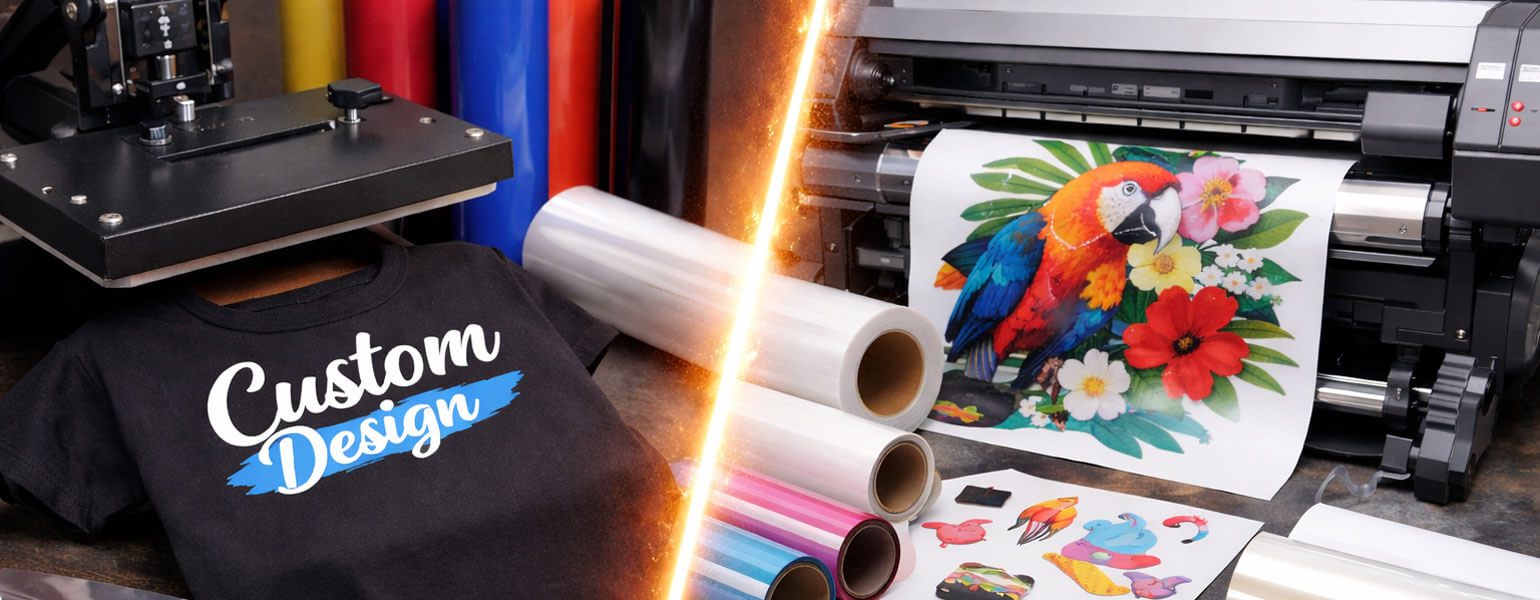
If you’re new to vinyl printing or crafting, you’re not alone in feeling confused. One of the most common questions I hear from beginners, small business owners, and even designers stepping into production for the first time is this:
“Isn’t HTV just the same as printable vinyl?”
At first glance, they do look similar. Both come in rolls or sheets. Both materials work with vinyl cutters and appear frequently in custom design projects. Creators use them across DIY crafts, apparel decoration, and signage, which often leads people to mention them in the same conversations.
Here’s the reality: HTV and printable vinyl serve very different purposes and function as two distinct materials. Choosing the wrong one can lead to wasted material, poor durability, and frustrated customers.
Let’s break it down clearly — from a practical, real-world printing perspective.
Why Beginners Often Think HTV and Printable Vinyl Are the Same
This confusion is completely understandable.
Both HTV and printable vinyl:
- Are thin, flexible films
- Can be cut using the same plotters
- They are sold in similar packaging
- They are popular in customization businesses
When people first enter the industry—especially those learning through short tutorials or social media clips—many guides fail to explain this distinction clearly.
The key difference isn’t how they look — it’s how they are applied and what surfaces they are designed for.
What Is HTV?
HTV, also known as iron-on vinyl, is specifically designed for fabric applications.
Key Characteristics of HTV
- Applied with heat and pressure using a heat press or iron
- Designed to bond permanently with textiles
- Has a heat-activated adhesive layer
- Typically comes with a carrier sheet for easy placement
HTV is cut in reverse, weeded, and then pressed onto fabric. Once properly applied, it becomes part of the garment rather than sitting on top of it.
Best Uses for HTV
HTV is ideal for:
- T-shirts, hoodies, and sweatshirts
- Sportswear and team uniforms
- Tote bags and fabric accessories
- Personalized clothing and promotional apparel
If your product will be washed, stretched, or worn, HTV is usually the right choice.
What Is Printable Vinyl?
Printable vinyl comes as a specially coated film that accepts ink from inkjet, eco-solvent, solvent, latex, or UV printers.
Key Characteristics of Printable Vinyl
- Printed first, then cut
- Uses ink, not heat, to create designs
- Applied with pressure-sensitive adhesive
- Bonds to hard, smooth surfaces
After printing, most users apply a laminate layer to protect the ink and improve long-term durability.
Best Uses for Printable Vinyl
Printable vinyl works best for:
- Stickers and decals
- Product labels
- Wall graphics
- Window signage
- Vehicle graphics
If the surface is rigid, not flexible like fabric, printable vinyl is the better option.
HTV vs Printable Vinyl: A Practical Comparison
| Application Method | Heat press | Pressure adhesive |
| Main Surface | Fabric | Hard surfaces |
| Printing Required | No (solid colors) | Yes |
| Durability | High on fabric | High on rigid surfaces |
| Washing Resistance | Excellent | Not designed for washing |
| Typical Finish | Matte / Gloss | Gloss / Matte / Special effects |
This table alone solves many beginner mistakes.
Choosing the Right Material for Your Project
The fastest way to choose between HTV and printable vinyl is to ask one question:
“What surface will this design live on?”
- Fabric → HTV
- Hard surface → Printable vinyl
Trying to use printable vinyl on a T-shirt will result in cracking and peeling. Using HTV on a wall or sign simply won’t work at all.
In professional production environments, material selection is never random — it’s always surface-driven.
Common FAQs About HTV and Printable Vinyl
1. Can I print on HTV?
Only if it’s printable HTV, which is a special hybrid product. Standard HTV is not designed to receive ink.
2. Can printable vinyl be heat-pressed?
No. Printable vinyl uses pressure-sensitive adhesive, not heat-activated glue. Heat can damage both the vinyl and the adhesive.
3. Which one is better for small businesses?
Neither is “better” overall — it depends on your product line. Apparel brands rely on HTV, while sticker and signage businesses depend on printable vinyl.
4. Do I need lamination for printable vinyl?
Yes, especially for outdoor use or frequent handling. Lamination protects the ink from UV, moisture, and abrasion.
5. Which lasts longer?
HTV lasts longer on fabric; printable vinyl lasts longer on hard surfaces. Longevity is about correct application, not material superiority.
Professional Advice From the Printing Floor
After years in the printing industry, I’ve seen most failures come down to one thing: using the wrong material for the job.
HTV and printable vinyl are not competitors — they are tools designed for different workflows. Understanding this distinction early saves money, time, and frustration.
Investing in quality materials from reliable suppliers also makes a noticeable difference in cutting performance, adhesion, and final appearance.
About Signzworld Materials
For those building or expanding a printing business, Signzworld offers a wide range of HTV and printable vinyl options designed for both beginners and professional users. Their product lineup focuses on stable cutting, consistent adhesion, and compatibility with common printing and heat press systems — making them a practical choice for workshops and commercial production alike.


