For anyone thinking about starting a sublimation or garment printing business in the UK, buying the first heat press is usually the biggest decision.
Not the printer.
Not the blanks.
Not even the workspace.
It’s the press itself.
Spend five minutes browsing online, and you’ll quickly notice the huge price gap. One retailer is selling a swing-away heat press for around £180, while another commercial machine costs well over £1,500. Some professional pneumatic presses even stretch beyond £3,000.
It’s enough to make anyone wonder whether the expensive machines really produce better prints, or whether you’re simply paying for a famous badge.
That question comes up surprisingly often on Reddit, Facebook printing groups and UK maker communities. New sellers worry that buying a cheap machine means poor-quality products. Others are convinced that spending thousands before making their first sale is unnecessary.
The truth sits somewhere in the middle.
I’ve spent quite a bit of time reading discussions from hobbyists, Etsy sellers, print shop owners and people who’ve upgraded from entry-level presses to commercial equipment. What’s interesting is that very few people say their first inexpensive machine was a complete waste of money.
What they do say is that they eventually discovered its limits.
The challenge is knowing whether those limits matter to your business.
Why Heat Press Prices Vary So Much in the UK
Unlike printers, where image quality often improves dramatically as you spend more, heat presses all aim to achieve the same basic job.
Apply consistent heat.
Apply consistent pressure.
Hold both for the correct amount of time.
That sounds simple enough.
The problem is that doing those three things accurately, repeatedly and for thousands of production cycles is far more difficult than it appears.
In the UK market, heat presses generally fall into three broad categories.
Entry-Level Machines
Usually priced between £150 and £300, these are the machines many beginners start with.
Typical features include:
- Clamshell design
- Manual pressure adjustment
- Basic digital temperature controller
- Suitable for occasional daily production
They’re popular among Etsy sellers, hobbyists, and anyone testing whether sublimation could become a business.
Mid-Range Heat Presses
Usually priced between £350 and £700.
This is where build quality starts improving noticeably.
Common upgrades include:
- Better heating elements
- More accurate temperature control
- Stronger pressure mechanism
- Larger working area
- Better insulation
- Faster recovery between jobs
Many small UK businesses stay happily in this category for years.
Commercial Production Machines
These often begin around £900 and easily exceed £2,000.
They’re designed for businesses producing hundreds of items every week.
Typical features include:
- Swing-away or pneumatic operation
- Heavy-duty steel construction
- Extremely accurate temperature control
- Uniform pressure across the platen
- Faster production workflow
- Designed to operate continuously throughout the working day
For someone printing five mugs after dinner, these machines are almost certainly overkill.
For someone fulfilling wholesale garment orders every morning, they’re often worth every penny.
The Biggest Difference Isn’t the Temperature
Ask a beginner why expensive presses cost more, and many will say:
“They probably get hotter.”
In reality, almost every modern heat press can reach the temperatures required for sublimation.
A £180 machine can usually reach 180°C just as easily as a £1,500 machine.
The real difference is how evenly it reaches and maintains that temperature.
That sounds like a small detail.
It isn’t.
Imagine pressing a polyester T-shirt.
The display says 190°C.
You assume every part of the platen is also 190°C.
Unfortunately, that’s rarely true on cheaper machines.
Some areas may actually be closer to 183°C.
Others could be over 195°C.
Those differences may not ruin a simple design.
But they become much more noticeable on:
- large photographic prints
- sports jerseys
- full-front graphics
- products requiring edge-to-edge transfers
Commercial presses are built specifically to minimise these temperature variations.
That consistency is one of the biggest reasons professionals invest more money.
Pressure Is Where Cheap Machines Usually Show Their Limits
Temperature gets most of the attention.
Pressure deserves just as much.
When people first start sublimation, it’s easy to think:
“As long as the press closes, everything should transfer.”
Unfortunately, pressure doesn’t spread itself evenly.
One of the most common experiences shared by UK and US makers online goes something like this:
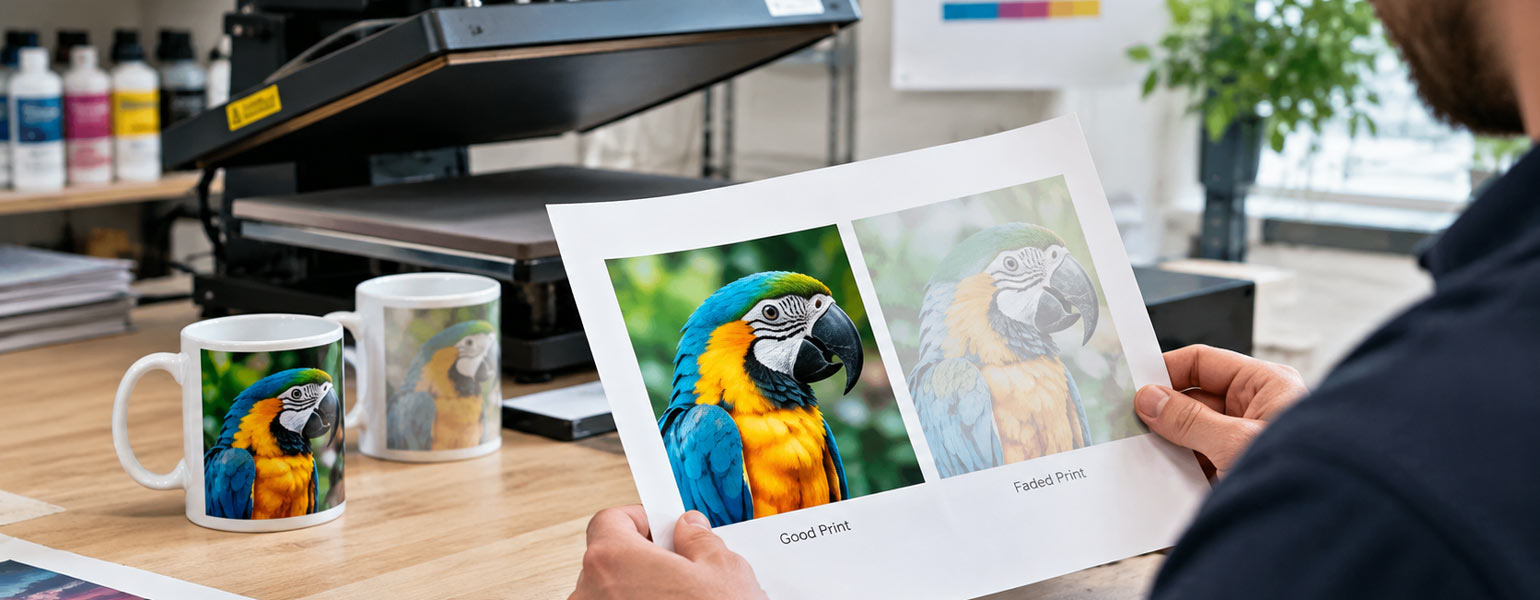
The centre of the design looks perfect.
The corners look slightly faded.
One edge appears lighter than the other.
Naturally, beginners assume they’ve printed with the wrong colour profile.
Sometimes they reprint the transfer several times before realising the issue isn’t the printer at all.
It’s the pressure.
Lower-cost presses often apply pressure slightly unevenly across the platen, especially after months of regular use. The difference might only be a fraction, but sublimation is surprisingly unforgiving. Even a small variation can leave certain areas looking softer, particularly on larger transfers.
For something like an 11oz mug, you’ll probably never notice.
For a full-size T-shirt featuring a detailed photographic image, it becomes much easier to spot.
A Cheap Machine Can Still Produce Excellent Results
This is the part that often gets overlooked.
Reading online discussions, you’d think every inexpensive heat press was unreliable.
That’s simply not what many experienced users report.
One Etsy seller described using an entry-level clamshell press to produce several thousand personalised tote bags before upgrading. Another small business owner said their first machine paid for itself many times over before they finally replaced it with a commercial press.
What these stories have in common isn’t that the machines were perfect.
It’s that the owners understood their limitations.
They weren’t trying to print hundreds of garments every day.
They weren’t producing sportswear for local football clubs.
They focused on products that placed fewer demands on the equipment, kept an eye on consistency and accepted that production was a little slower.
That distinction is important because it changes the question from “Is a cheap heat press any good?” to “Is it good enough for the products I actually plan to make?”
What People on Reddit Really Say After Using Both
One thing I like about Reddit is that people rarely try to sell you anything.
If a machine is brilliant, it’ll usually explain why.
If it’s terrible, they’ll explain that as well.
After reading discussions from hobby printers, Etsy sellers and small print businesses over several years, a pattern starts to appear.
People don’t necessarily regret buying a cheaper heat press.
They usually regret expecting it to behave like a commercial machine.
That sounds obvious, but it’s an important distinction.
Let’s look at some of the situations that come up again and again.
Case One: “My £200 Press Has Earned Me Thousands”
This is probably the most common story.
Someone buys an entry-level clamshell press because they can’t justify spending over £1,000.
Six months later, they’re surprised.
Orders keep coming in.
Customers are happy.
Nothing has gone wrong.
Many eventually say something like:
“I’ll upgrade one day, but this one has already paid for itself many times.”
What’s happening here?
Usually, they’re producing products such as:
- Ceramic mugs
- Tote bags
- Cushion covers
- Mouse mats
- Coasters
- Small T-shirts
- Baby clothing
These products don’t place enormous demands on the machine.
The printable area is relatively small.
Pressure is easier to distribute.
Temperature differences are less noticeable.
If you’re producing ten personalised mugs every evening after work, a decent entry-level machine may perform perfectly well for years.
This is why so many new business owners become confused.
They hear experienced printers recommending expensive presses, yet their own inexpensive machine seems absolutely fine.
Both observations can be true.
Case Two: “Everything Looked Fine Until I Started Printing Bigger Designs”
This is where opinions often begin to change.
A small business grows.
Customers start ordering:
- Adult hoodies
- Oversized T-shirts
- Sportswear
- Full-front graphics
- Large promotional garments
Suddenly, problems begin appearing.
Not dramatic failures.
Small inconsistencies.
Perhaps the top corner looks slightly lighter.
Maybe one sleeve transfers beautifully while another needs pressing again.
Sometimes black appears slightly brown around one edge.
The printer gets blamed.
ICC profiles get blamed.
Paper gets blamed.
Eventually, someone checks the platen with a temperature gun.
That’s when they discover one side of the press is running several degrees cooler than the other.
For sublimation, a few degrees really can make a visible difference.
The machine hasn’t suddenly become worse.
The work has simply become more demanding.
Case Three: Continuous Production Changes Everything
One discussion I found particularly interesting involved a small print shop that had recently landed several large local orders.
Previously, they produced around twenty garments each week.
Now they needed to press well over one hundred every day.
Their inexpensive machine still worked.
The problem wasn’t quality.
It was speed.
After every press cycle, the platen temperature dropped slightly.
The controller needed time to recover.
One or two garments weren’t a problem.
Two hundred garments were.
By mid-afternoon, production had slowed considerably.
That’s one of the biggest differences commercial users notice.
Expensive presses aren’t only designed to produce better transfers.
They’re designed to produce the same transfer hundreds of times without slowing down.
Consistency becomes productivity.
And productivity becomes profit.
Where Cheap Heat Presses Usually Perform Surprisingly Well
People often assume a lower-priced machine limits what you can make.
That’s not really true.
It depends far more on the product.
Ceramic Mugs
Ironically, mugs are one of the easiest products for beginners.
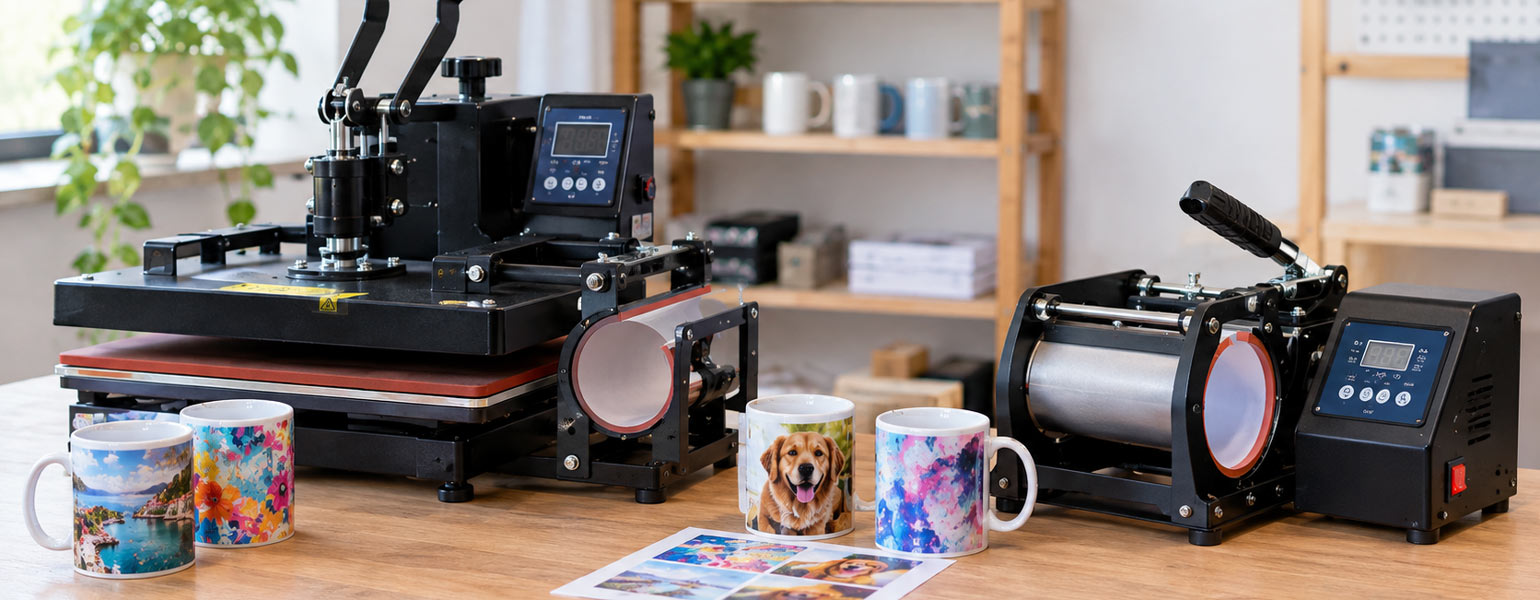
A dedicated mug press handles most of the work, but even a combination press generally achieves excellent results.
As long as temperature and time are reasonably accurate, prints are usually vibrant and consistent.
For personalised gifts, photo mugs and promotional mugs, an affordable machine is often more than capable.
Mouse Mats
Mouse mats have a relatively forgiving surface.
Minor pressure variations are rarely visible.
They’re also quick to produce, making them ideal for anyone learning sublimation.
Coasters
Whether you’re pressing cork-backed or MDF coasters, the printable area is small enough that inexpensive machines normally perform very well.
They’re popular among Etsy sellers for exactly this reason.
Cushion Covers
Polyester cushion covers remain one of the most beginner-friendly sublimation products.
The fabric accepts sublimation beautifully, and most designs don’t extend right to every edge.
That gives a little more tolerance during pressing.
Tote Bags
Canvas-style polyester tote bags are another product frequently recommended to newcomers.
They’re inexpensive, easy to source and relatively forgiving when pressed correctly.
Many successful Etsy businesses started with little more than tote bags, mugs and a modest heat press.
Rock Slate
People are often surprised to see slate included here.
Although it feels premium, the printable surface itself isn’t especially difficult.
Providing your press reaches the required temperature consistently, slate products usually transfer extremely well.
Where Premium Heat Presses Begin to Earn Their Price
The picture changes when larger, more demanding products enter the workflow.
Large T-Shirts
This is where pressure consistency starts becoming much more noticeable.
A large photographic print covering most of an adult T-shirt leaves very little room for uneven heat.
Tiny variations suddenly become visible.
Sports Jerseys
Performance fabrics are generally less forgiving.
They’re thinner.
Heat reacts differently.
Customers also expect sharp logos, vibrant colours and consistent branding.
If you’re producing shirts for clubs or organisations, reliability quickly becomes more valuable than saving money on the machine.
Oversized Hoodies
Thicker materials require pressure to be distributed evenly across a larger surface.
A stronger frame and a more stable pressure system can make everyday production much easier.
Metal Photo Panels
Metal sublimation blanks are unforgiving.
Colour shifts show immediately.
If temperature varies across the platen, you’ll often notice it in skin tones and gradients long before you see it on fabric.
High-Volume Commercial Orders
This is probably the clearest dividing line.
If you’re pressing fifty products each month, an entry-level machine may be all you ever need.
If you’re pressing five hundred products every week, downtime, consistency and production speed suddenly become major business costs.
That’s when investing in a commercial press often pays for itself much faster than expected.
Don’t Judge a Heat Press by Its Price Alone
One lesson kept appearing throughout community discussions.
People rarely regretted buying a machine because it was inexpensive.
They regretted buying a machine that didn’t match the way their business eventually grew.
Some purchased commercial presses before making their first sale.
Months later, the machine was still sitting in a spare room because they hadn’t built enough demand.
Others went in the opposite direction.
They tried running a growing business with equipment that was never designed for continuous daily production.
Neither situation is ideal.
The best machine isn’t necessarily the most expensive one.
It’s the one that suits where your business is today while leaving enough room for tomorrow.
So, Which Heat Press Should You Actually Buy?
After comparing specifications, reading countless discussions from UK printing groups and Reddit, and looking at the kinds of products people actually make every day, I’ve come to one conclusion.
Most beginners buy the wrong heat press.
They buy the wrong heat press for the stage their business is at.
It’s easy to think ahead.
“What if I suddenly get 100 orders a week?”
“What if I start supplying local schools?”
“What if I need to print hundreds of T-shirts every month?”
Those questions aren’t unreasonable.
But they can also lead to spending a large amount of money before you’ve proved there’s enough demand.
A heat press should help your business grow.
It shouldn’t become the reason you’re worrying about cash flow before your first customer arrives.
If Your Budget Is Around £200
This is where many UK hobbyists and new Etsy sellers begin.
At this level, I’d focus less on extra features and more on reliability.
Look for:
- A stable digital temperature controller
- Easy pressure adjustment
- Even heating across the platen
- A supplier that offers spare parts and after-sales support
Don’t get distracted by machines advertising dozens of preset programmes.
A heat press isn’t an air fryer.
Once you’ve found the right temperature and pressure for your favourite blanks, you’ll probably use the same settings again and again.
For this budget, I’d recommend concentrating on products such as:
- Ceramic mugs
- Mouse mats
- Coasters
- Polyester cushion covers
- Tote bags
- Small T-shirts
- Rock slates
These products allow you to learn sublimation properly without placing huge demands on the equipment.
More importantly, they also happen to be some of the UK’s most popular personalised gifts.
If Your Budget Is Around £500
This is probably the point where value for money peaks.
You’re no longer buying the cheapest machine available, but you’re also avoiding paying commercial prices before they’re necessary.
For many small businesses, this category offers the best balance between performance and cost.
You’ll usually benefit from:
- Better pressure consistency
- Improved temperature accuracy
- Stronger construction
- Faster recovery between press cycles
- More confidence when tackling larger designs
If you’re starting to receive repeat customers or regular business orders, this is often where an upgrade starts making financial sense.
Rather than producing better-looking prints dramatically, these machines reduce the small inconsistencies that gradually become frustrating as production increases.
If You’re Looking at £1,000 and Beyond
This is no longer just about print quality.
It’s about running a business efficiently.
Commercial presses are designed for people who don’t have time to second-guess every transfer.
They need to know that the hundredth garment of the day will look just like the first.
That’s where heavier frames, more accurate temperature control and higher-quality pressure systems begin to justify their cost.
If you’re producing:
- School uniforms
- Sportswear
- Corporate clothing
- Large wholesale orders
- Daily production runs
Then investing in professional equipment can actually save money over time.
Less waste.
Fewer failed transfers.
Higher productivity.
Less downtime.
For businesses operating at this level, those benefits quickly outweigh the higher purchase price.
Spend More on the Right Things
One thing that stood out while reading community discussions was how experienced printers prioritise their spending.
Very few recommend buying the most expensive heat press straight away.
Instead, they often suggest investing in areas that directly affect print quality.
For example:
A reliable sublimation printer will usually make a bigger difference than a premium touchscreen on a heat press.
Good-quality sublimation paper can reduce ghosting and improve colour consistency.
Reliable inks tend to produce more predictable colours over time.
High-quality blanks can transform the finished product far more than many people expect.
It’s easy to underestimate this.
Someone using excellent blanks with a sensible entry-level heat press will often produce better-looking products than someone using poor-quality blanks with a machine costing three times as much.
The entire workflow matters.
Not just the press.
Think About the Products You Want to Sell Next Year
One mistake many beginners make is choosing equipment based only on today’s ideas.
Right now, you might only want to make mugs.
Six months later, a local dance school asks for fifty hoodies.
Another customer wants football shirts.
Someone else orders promotional workwear.
Your product range naturally expands as your confidence grows.
That doesn’t mean you should immediately buy commercial equipment.
It does mean it’s worth asking yourself one question before buying anything.
Where do I realistically expect this business to be in twelve months?
If the answer is:
“I’d be delighted to sell twenty personalised gifts each week.”
A good entry-level machine is probably all you need.
If the answer is:
“I’m planning to build a full-time printing business.”
Buying a more capable machine from the beginning may save money in the long run.
The keyword is realistically.
It’s easy to plan for success.
It’s much harder to predict it.
Reliability Is Worth More Than Extra Features
After reading so many real-world experiences, something became surprisingly clear.
Very few people praised a heat press because it had more buttons.
They praised it because it worked.
Day after day.
Month after month.
Without needing constant adjustments.
Without mysterious temperature fluctuations.
Without wondering whether this transfer would be the one that failed.
That’s the kind of reliability people remember.
Not whether the display looked modern.
Not whether it had fifteen different presets.
Just whether they could trust it when a customer order was waiting.
Finding the Right Balance
There’s a temptation to think every successful print business started with top-of-the-range equipment.
Many didn’t.
Quite a few began with a modest heat press on a kitchen table, producing personalised mugs or tote bags during evenings and weekends.
The difference wasn’t the machine.
It was known that the machine had reached its limit.
A budget heat press can be an excellent way to learn sublimation, build confidence and generate your first sales.
As orders grow, the machine that once felt perfectly adequate may eventually become the bottleneck.
That’s a good problem to have.
It usually means your business has outgrown its first setup.
If you’re shopping for a heat press in the UK today, try not to focus solely on price.
Focus on consistency, support, build quality and whether the machine genuinely matches the products you intend to make.
For many beginners, that doesn’t have to mean spending thousands from day one.
A Practical Starting Point for UK Sellers
Whether you’re launching an Etsy shop, adding sublimation to an existing craft business or preparing for larger commercial work, choosing equipment from a supplier that offers multiple levels of heat presses makes future upgrades much easier.
Signzworld supplies a range of heat press machines for different stages of business growth, from affordable entry-level models suited to personalised gifts and small production runs through to more robust presses designed for businesses handling larger daily workloads. Because the range covers different budgets and applications, many UK sellers can start with a machine that fits their current needs while knowing there’s a clear upgrade path as their business expands.
Sometimes the best investment isn’t buying the most expensive machine available.
It’s buying the one that lets you start producing confidently today, while leaving room to grow tomorrow.