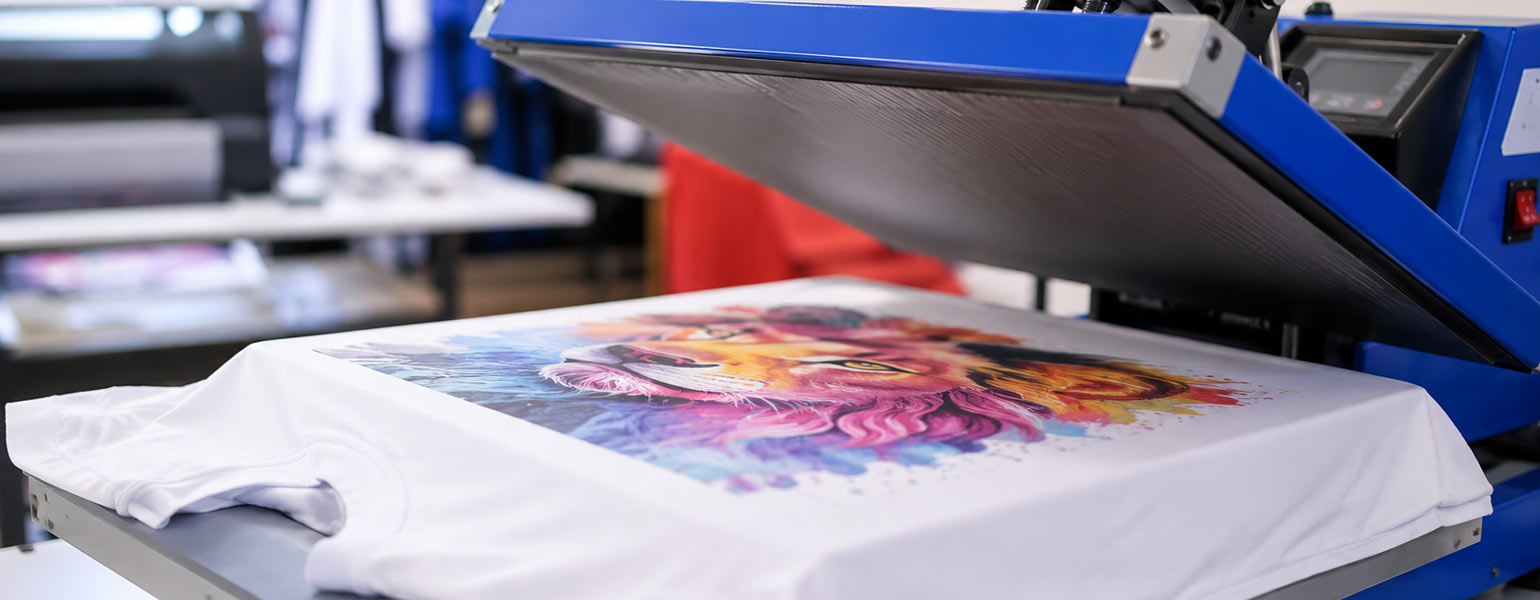
A few years ago, a lot of people in the UK print industry were convinced that sublimation printing was slowly losing ground.
DTF was everywhere. Small apparel businesses were switching over. Social media was full of videos showing bright transfers being pressed onto cotton shirts in seconds. For a while, it almost felt like sublimation had become “the old method.”
But 2026 is telling a different story.
Across the UK, demand for custom sportswear is climbing again, and not just at the professional level. The real growth is happening in smaller communities and local businesses:
- amateur football clubs
- independent gyms
- running clubs
- esports teams
- university societies
- pickleball and padel communities
- fitness events and charity races
These groups are not simply looking for basic logo printing anymore. They want bold designs, modern aesthetics, premium comfort, and apparel that actually feels like a real sportswear brand rather than a cheap printed shirt.
And that shift is quietly pushing sublimation printing back into the conversation.
Especially when it comes to all-over print sportswear.
Because once brands start asking for full gradients, edge-to-edge graphics, breathable fabric, and long-term durability, sublimation suddenly becomes very hard to replace.
UK Sportswear Trends Are Changing Fast
One thing that stands out in 2026 is how visual the UK sportswear market has become.
People no longer want plain team kits with a tiny logo on the chest. Even local clubs now want something that looks custom-made and social-media ready.
You see it everywhere:
- football teams using bold geometric fades
- Gyms launching oversized training jerseys
- Esports organisations creating futuristic full-print uniforms
- running clubs using gradient colour transitions
- Padel brands are experimenting with loud neon patterns
- fitness influencers creating limited-edition apparel drops
The rise of TikTok, Instagram Reels, and short-form video has changed expectations completely.
Sportswear is no longer just functional. It is now part of branding, identity, and online presence.
A local gym in Manchester might have only a few hundred members, but it still wants merch that looks like a professional athletic label. Small esports teams want jerseys that feel “major league.” Running clubs want apparel that photographs well during events.
That visual demand matters because it naturally favours printing methods that can handle large, uninterrupted artwork.
And this is exactly where sublimation printing becomes difficult to beat.
The Biggest Advantage of Sublimation Is Freedom of Design
A lot of people talk about sublimation as if it is only a printing method.
In reality, for sportswear brands, it is more like a design system.
It allows designers to treat the entire garment as a canvas.
Not just the front logo area. Not just the chest.
The entire shirt.
That changes everything creatively.
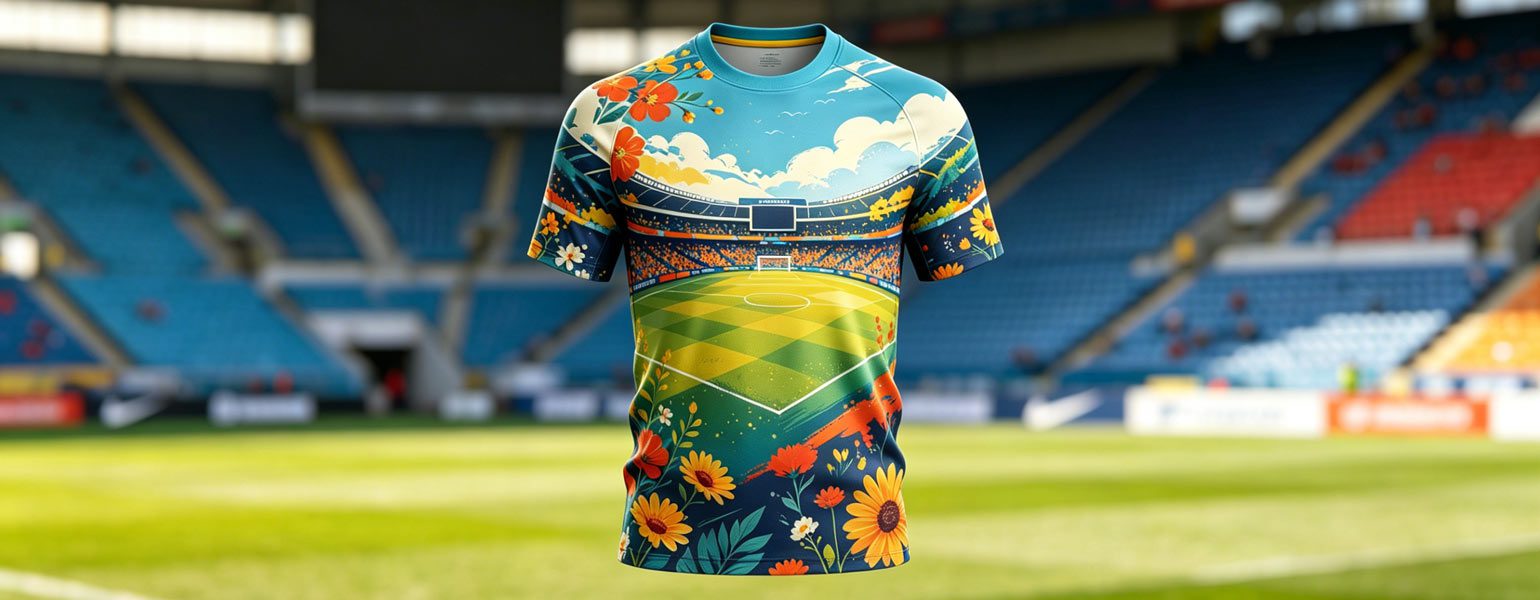
With sublimation, designers can build seamless all-over visuals without worrying about heavy layers, cracking prints, or visible transfer edges.
That freedom has become incredibly valuable in 2026 because sportswear trends are moving toward more immersive designs rather than minimal decoration.
Especially in the UK market, there is a growing preference for:
- fluid gradients
- layered textures
- oversized patterns
- sleeve-to-sleeve graphics
- modern camouflage styles
- abstract motion effects
- retro revival colour palettes
These are not easy to reproduce cleanly with traditional transfer-based decoration methods.
But sublimation handles them naturally.
Full Gradients Look Cleaner and More Premium
One of the clearest reasons why sublimation dominates all-over print apparel is gradients.
Modern sportswear relies heavily on smooth colour transitions.
You see this trend constantly now:
- purple-to-blue esports jerseys
- sunset-inspired running shirts
- black fade football kits
- Neon gym wear with blended colour flow
- tonal sleeve transitions
With sublimation, gradients become part of the fabric itself.
No visible layers are sitting on top of the material. No thick transfer texture interrupts the colour flow.
The result feels cleaner, sharper, and far more premium.
This is especially important for sportswear photography and online marketing. Under studio lighting or natural daylight, sublimated gradients tend to appear softer and more integrated into the garment.
That visual smoothness is one of the reasons many UK sportswear startups are returning to sublimation after experimenting with DTF.
DTF can absolutely produce vibrant colours, but large gradient transitions across breathable polyester garments often feel less natural visually. Once you move into edge-to-edge printing, sublimation simply has a more seamless finish.
And consumers notice it, even if they cannot explain why.
Large Graphics Without Heavy Print Feel
Another major reason sublimation works so well for sportswear is the ability to cover huge areas without making the garment uncomfortable.
This matters more than people think.
Many modern teamwear designs now involve:
- oversized chest artwork
- sleeve graphics
- full-back illustrations
- side-panel textures
- wraparound patterns
With some printing methods, the larger the print becomes, the heavier and stiffer the shirt starts to feel.
That is a problem for athletes.
Nobody wants a training jersey that feels like plastic wrapped around their torso during a workout.
Sublimation avoids this because the ink becomes embedded into the polyester fibres instead of sitting on top.
The fabric remains lightweight and flexible.
Even heavily designed garments still feel breathable and athletic rather than coated.
For football training kits, gym apparel, and running shirts, that difference becomes obvious very quickly during actual movement.
A shirt can look amazing online, but if it traps heat or feels sticky during exercise, customers will not reorder.
And repeat orders are everything in sportswear.
The “No Feel” Effect Is a Bigger Deal Than People Realise
One phrase that keeps coming up in sportswear manufacturing conversations lately is “no feel print.”
This is becoming a huge selling point.
Consumers are getting more sensitive to comfort, especially in activewear.
People want clothing that feels soft, flexible, and unrestricted.
With sublimation, there is effectively no additional print layer on the garment surface.
You run your hand across the fabric, and it feels like fabric.
Not a thick transfer.
No rubbery texture.
No plastic-like film is sitting on the surface.
That might sound like a small detail, but it completely changes how premium sportswear feels in real life.
This is one reason why sublimation remains extremely popular in cycling jerseys and high-performance athletic apparel. Athletes care about mobility and comfort far more than casual fashion consumers.
And as UK sportswear brands become more performance-focused, this advantage becomes increasingly important.
Especially for:
- running shirts
- compression wear
- Esports jerseys worn for long sessions
- gym apparel
- lightweight football kits
The softer feel gives sublimated apparel a more professional quality overall.
Breathability Still Matters More Than Hype
One interesting thing happening in 2026 is that many apparel businesses are starting to move beyond pure trend hype.
A few years ago, people mainly focused on what looked impressive in short videos.
Now brands are paying more attention to long-term wearability.
Breathability has become a serious conversation again.
And this is where sublimation quietly wins.
Because the print does not block airflow the same way as thicker surface applications can.
For sportswear, that matters massively.
A breathable polyester performance shirt only works properly if the moisture-management properties remain intact.
Once large transfer areas start interfering with ventilation, the entire purpose of technical sports fabric becomes weaker.
Sublimation preserves the original performance characteristics of the garment much better.
That is why many sportswear manufacturers still trust it for serious athletic use.
Not because it is trendy.
Because it works.
Wash Durability Is Still One of Sublimation’s Strongest Advantages
Another reason sublimation is making a comeback in UK sportswear circles is durability.
Sportswear gets abused.
It goes through:
- sweat
- repeated washing
- stretching
- outdoor weather
- gym friction
- machine drying
Cheap decoration methods start showing problems quickly under those conditions.
Cracking, peeling, fading, and texture breakdown can make apparel look worn out fast.
Sublimation performs differently because the dye becomes part of the fabric structure itself.
There is no separate layer waiting to detach.
That means properly produced sublimated garments can maintain colour vibrancy for a very long time, even after heavy use.
For amateur football clubs and local gyms, this matters financially too.
Teams want kits that survive an entire season without looking destroyed halfway through.
And consumers are becoming more aware of quality now. They are less willing to accept apparel that starts deteriorating after a few washes.
Why DTF Still Struggles to Fully Replace Sublimation
This is the part many people in the industry now admit openly.
DTF is extremely useful.
But it is not automatically the best solution for every category.
DTF excels in versatility, especially for cotton apparel and small-batch fashion printing.
But when it comes to high-performance all-over sportswear, sublimation still holds several structural advantages.
The biggest issue is that DTF is fundamentally a surface application.
Even with improvements in flexibility and softness, large-area athletic designs can still affect breathability and feel compared to sublimation.
And once sportswear brands begin prioritising lightweight performance, sublimation becomes difficult to ignore.
This is why many UK print businesses are no longer treating the conversation as:
“Sublimation versus DTF.”
Instead, they are using both strategically.
DTF for:
- cotton merchandise
- casual streetwear
- mixed-fabric jobs
- short-run logo printing
Sublimation for:
- teamwear
- performance apparel
- cycling kits
- esports jerseys
- all-over print sportswear
That balance is becoming increasingly common in 2026.
Small UK Sportswear Brands Are Quietly Returning to Sublimation
One of the most interesting shifts right now is that many smaller sportswear brands are rediscovering sublimation after spending time chasing newer methods.
Not because sublimation suddenly became fashionable again.
Because the market itself evolved.
Customers now expect:
- stronger branding
- premium aesthetics
- lightweight comfort
- durable performance wear
- unique full-print designs
And sublimation naturally fits those expectations.
You can especially see this among:
- independent gym apparel startups
- custom football kit suppliers
- esports merch brands
- niche fitness labels
- local athletic communities
A lot of these businesses realised that if they want truly premium all-over sportswear, sublimation still delivers one of the best overall combinations of comfort, durability, colour integration, and visual impact.
In some ways, the industry is becoming more mature.
Less obsessed with whichever method is newest.
More focused on which method actually suits the product.
Sublimation Still Has a Strong Future in 2026
There was a period when people constantly asked whether sublimation printing was dying.
That conversation feels very different now.
The UK sportswear market in 2026 is proving something important:
Sublimation was never really replaced. It simply moved back toward the categories where it performs best.
And all-over print athletic apparel is absolutely one of those categories.
As demand continues growing for custom teamwear, esports jerseys, gym apparel, and high-visual sports clothing, sublimation keeps offering advantages that remain genuinely difficult to replicate fully.
Especially when brands care about:
- seamless gradients
- edge-to-edge graphics
- lightweight comfort
- breathable fabric
- long-term colour durability
- premium athletic feel
That is why many print businesses are no longer asking whether sublimation still works.
They are asking how to use it more effectively.
And honestly, that says a lot about where the market is heading.
Companies like Signzworld are also seeing increasing attention around sublimation equipment, blanks, and heat press solutions tied to sportswear production and personalised apparel businesses. As more UK brands move toward custom performance wear and full-print designs, the conversation around “sublimation still profitable in 2026” is starting to sound far less like a debate and much more like a realistic business opportunity.